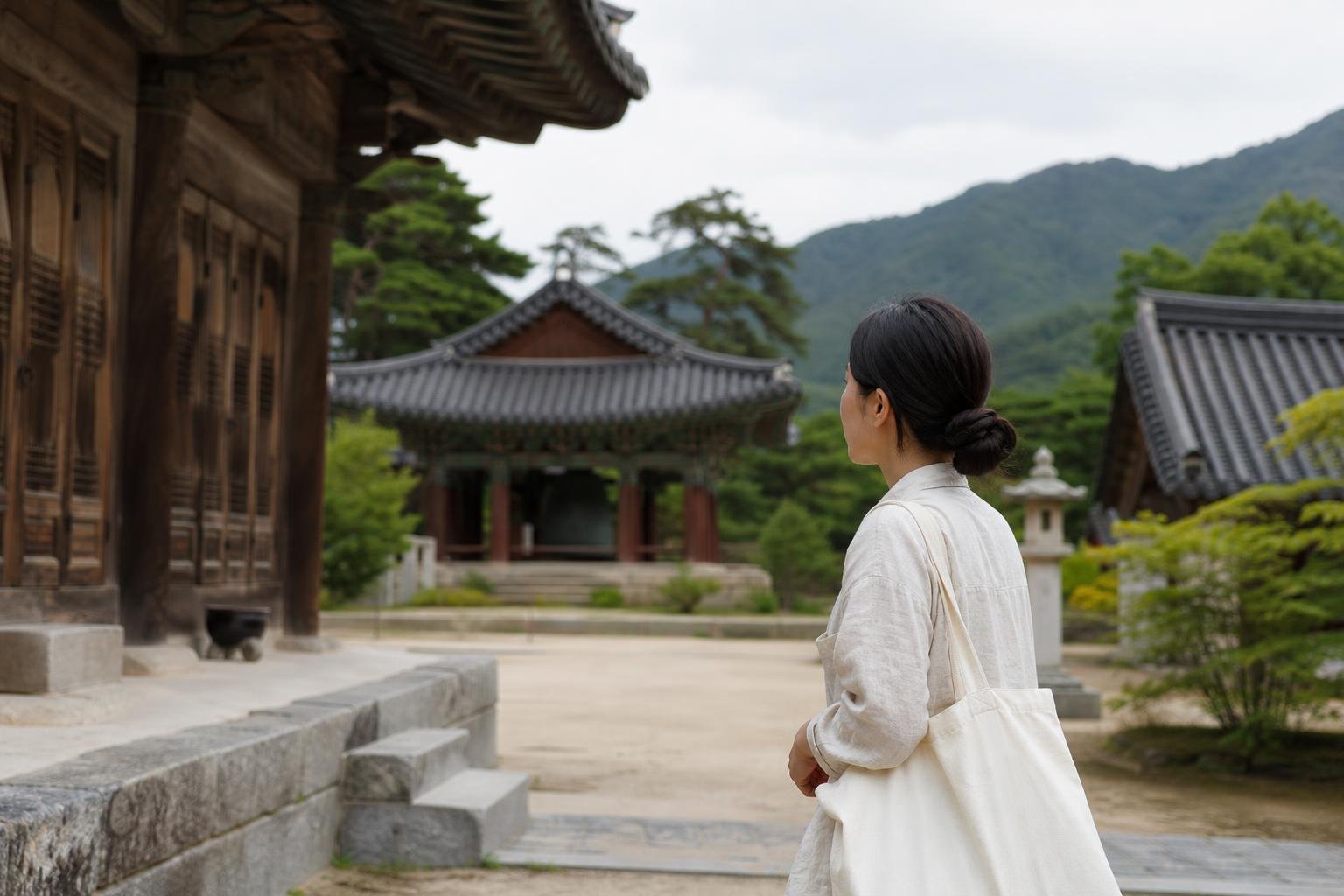
A Korean Buddhist temple may be a major heritage attraction, an active monastery, a neighborhood place of worship, or all three at once. The basic etiquette is straightforward: speak quietly, dress neatly, follow posted instructions, and avoid interrupting anyone who is praying or working.
You do not need to be Buddhist, perform prostrations, or understand a service to visit respectfully. Rules also differ by temple and building, so instructions from signs, staff, or program leaders take priority over general advice.
Remember that the temple is still in use
Courtyards, gates, pagodas, and mountain paths may feel like sightseeing spaces, but temples also host daily practice, ceremonies, memorial observances, and residential monastic life. Keep calls brief and quiet, silence media before approaching a prayer hall, and do not use statues, altars, monastics, or worshippers as scenery for a posed photograph.
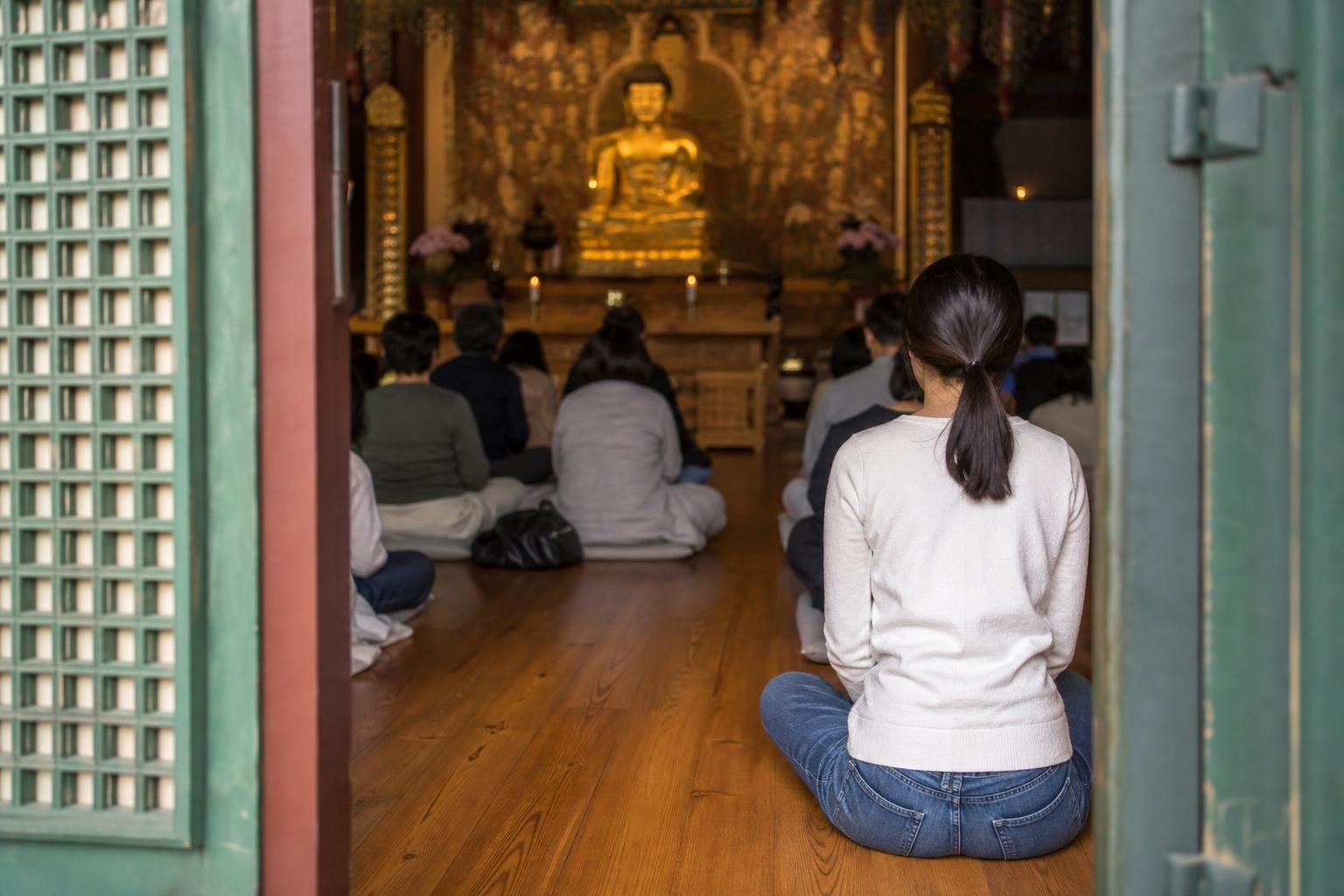
You may hear yebul (예불), a Buddhist service that commonly includes chanting and bows. If a hall is open to visitors, observe from the side or back unless someone directs you elsewhere. Do not cross between worshippers and the altar, weave through rows during chanting, or remain in a doorway where people need to enter. Current Templestay guidance likewise emphasizes silence, orderly movement, punctuality for services, and respect within Dharma halls. source
Some buildings and residential areas are not open to the public even when the surrounding grounds are accessible. A closed door, rope, barrier, or Korean-only notice should not be treated as an invitation to investigate.
Wear practical, modest clothing—and bring socks
There is no single national dress code for every daytime visitor. For an ordinary visit, choose clean clothing that is comfortable for walking and not especially revealing. Mountain temples can involve uneven stone paths, steep stairs, and unpaved approaches, making sneakers or hiking shoes more useful than heels or loose slippers.
- Avoid clothing that is very short, transparent, or designed primarily for the beach or nightlife.
- Carry or wear clean socks if you may enter a prayer hall.
- Bring an extra layer for mountain locations, particularly for an early service or overnight program.
- Keep bags and loose clothing from brushing against candles, offering tables, paintings, or ritual objects.
Temple guidance commonly asks visitors or Templestay participants to remove shoes before entering a Dharma hall and to wear socks rather than enter barefoot. Current program pages from Bongeunsa, Haeinsa, Woljeongsa, and Jogyesa specifically mention modest clothing, socks, or both. source
You do not need special Buddhist clothing for a casual visit. Templestay programs often provide a vest and trousers, but what is supplied varies by temple.
Entering a Buddha hall
Before entering, pause and look for a shoe rack, signs, floor markings, or guidance from a volunteer. If shoes are being removed, place yours neatly without blocking the threshold. Do not assume that every museum, pavilion, office, or shrine uses the same arrangement.
Many Korean Buddhist etiquette guides direct people to use a side door or side stair rather than the central entrance of a Dharma hall. That practice keeps visitors away from the main ceremonial axis and the area directly facing the Buddha image. Use the side entrance when one is clearly available, but follow the building’s actual layout and local instructions rather than forcing the rule where it does not fit. source
Inside the hall:
- Move slowly and keep conversation to a minimum.
- Remain near the side or back if a service is underway.
- Do not step over prayer cushions, mats, books, or another person’s legs.
- Avoid standing in the central line between the altar and people who are bowing.
- Do not touch statues, paintings, ritual instruments, candles, or offerings.
It is acceptable to look quietly and leave without performing a religious gesture. If you want to offer a simple sign of respect, place your palms together at chest height in hapjang (합장) and make a small bow. Temple programs commonly teach this half-bow when greeting monastics or entering a hall. It is courteous, but an uninitiated sightseeing visitor should not feel compelled to imitate every ritual taking place. source
Be conservative about photography
Photography policies are site-specific. Outdoor photography may be permitted while photography inside a hall, museum, repository, or temporary exhibition is restricted. Ceremonies and conservation work can also change access without much notice. Check for camera symbols and posted rules before taking a picture rather than assuming that admission to a space includes permission to photograph it.
Even where photography is allowed, do not photograph a recognizable person who is praying, bowing, grieving, or participating in a rite without permission. Avoid flash around worship, paintings, and historic interiors, and do not move objects or enter a restricted area to improve a composition.
The same principle applies to monks and nuns. Religious clothing does not make someone a public photo subject. For a close portrait, ask first:
사진 찍어도 될까요?
Sajin jjigeodo doelkkayo?
“May I take a photo?”
A refusal may be verbal, but it may also be a head shake, a hand gesture, or a person turning away. Accept it without pressing for an explanation.
Offerings and rituals are optional
You may see people lighting candles or incense, making donations, writing wishes, purchasing lantern dedications, or completing three full prostrations. These are religious practices, not activities every visitor is expected to copy.
If you want to participate, use only the designated materials and follow the displayed instructions. Do not light your own candle or incense in an unmarked location, place personal items on an altar, strike a bell or drum, or handle ritual implements unless a staff member or program leader invites you.
Donations are generally voluntary unless a particular admission, workshop, meal, or program has a stated charge. Place money only in the appropriate box or payment area. There is no need to make an offering merely because you entered a hall.
Give monastics and worshippers personal space
A quiet annyeonghaseyo (안녕하세요) with a slight bow is sufficient when someone greets you. Hapjang and a half-bow are also commonly taught as a respectful greeting for a monastic. Do not assume that a monk or nun is available for a selfie, an extended religious discussion, or language practice.
In Korean, seunim (스님) is the usual respectful form of address for a Buddhist monastic. Visitors rarely need to use a more specific title unless they have been introduced to the person and told how to address them.
Avoid initiating physical contact. This is practical respect for personal and religious boundaries, not a claim that every monastic follows an identical rule. If you need help, approach an information desk, volunteer, or Templestay coordinator rather than interrupting someone engaged in chanting or meditation.
Food is part of temple practice
Keep drinks and snacks out of prayer halls, and dispose of cups and wrappers properly. Smoking and alcohol are prohibited in Templestay programs and inappropriate around monastic and worship spaces; individual temples may also restrict outside food. source
Korean temple food is traditionally prepared without meat or fish and excludes osinchae (오신채), five pungent vegetables associated with restrictions in Buddhist practice. The precise list can be translated differently because one traditional ingredient, heunggeo (흥거), is unfamiliar in modern Korean cooking; the Korean Temple Food program lists garlic, green onion, chives, wild chive, and heunggeo. If you have an allergy or follow a strict vegan, gluten-free, or other medical diet, confirm ingredients rather than relying only on the label “temple food.” source
Baru gongyang (발우공양) is a formal monastic meal using nested bowls and a prescribed sequence. Participants eat quietly, take only what they can finish, and clean the bowls according to the ceremony. It should be learned from the leader rather than copied from other diners. source
A Templestay has its own rules
A Templestay is more structured than walking through temple grounds. Programs may include a temple tour, yebul, Seon meditation, tea, a monastic meal, 108 prostrations, or conversation with a monastic. The schedule, required participation, room arrangements, language support, and physical demands differ by temple and program. source
Before booking, check the current program page for arrival time, packing requirements, accessibility, meal information, and cancellation terms. Tell the coordinator in advance about mobility limitations, injuries, allergies, medication needs, or religious concerns. Do not assume that every bowing or sitting activity can be adapted on the spot, although staff may be able to explain an alternative when notified early.
Expect rules concerning quiet hours, phones, meals, restricted areas, alcohol, smoking, outside food, and leaving the grounds. These are set by the individual temple rather than by one universal Templestay rulebook. For example, current programs at Naksansa, Bongeunsa, Haeinsa, and Golgulsa publish overlapping but not identical requirements. source
For a short visit, you do not need to memorize Buddhist ritual. Pause at thresholds, notice what others are doing, and choose the least disruptive option when uncertain. That combination of attention and restraint is more useful than trying to perform every gesture perfectly.