Why Do Koreans Take Off Their Shoes Indoors?
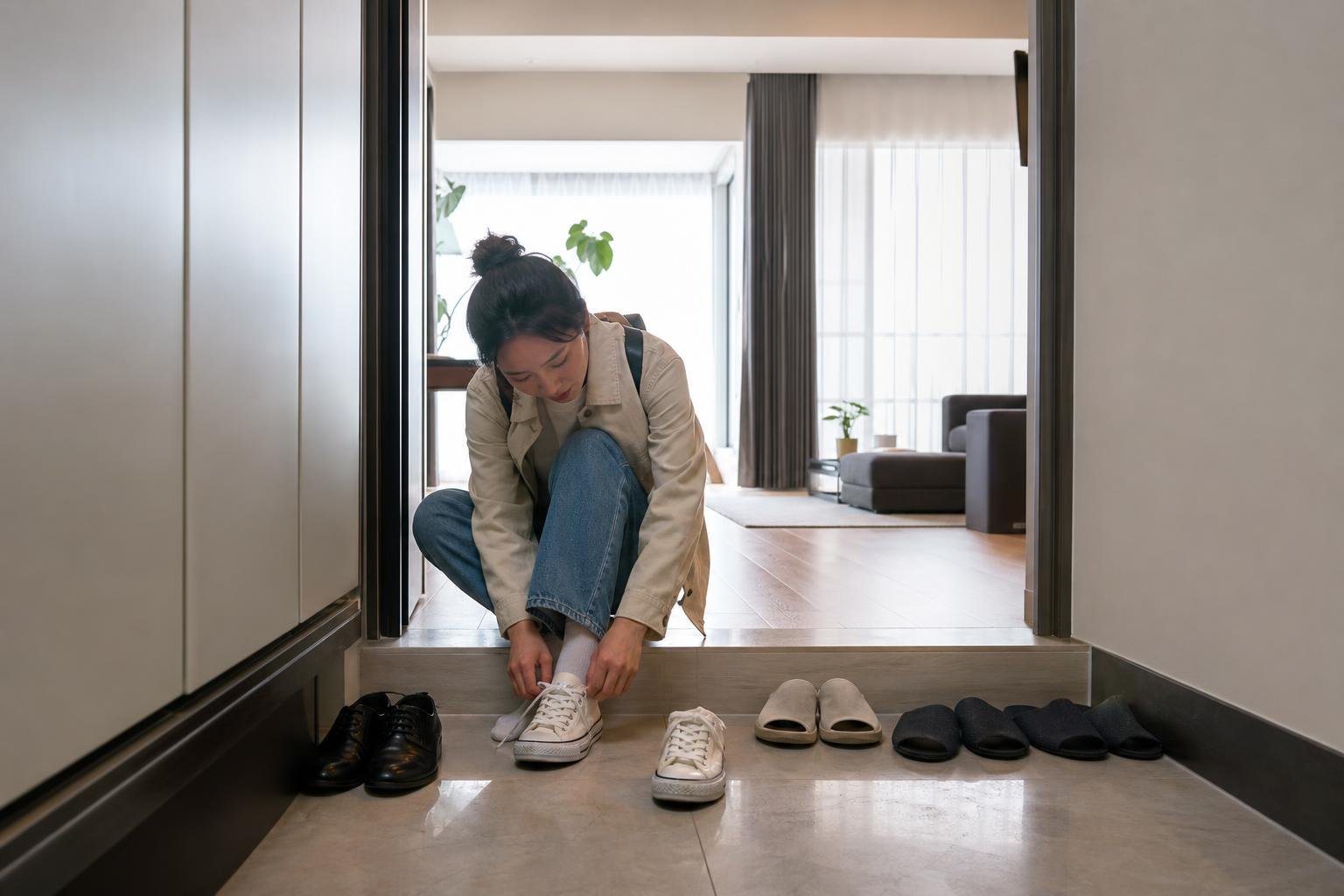
Outdoor shoes lined up below the raised entrance floor of a Korean apartment

Koreans generally remove outdoor shoes when entering a home because the floor is treated as clean living space. People may sit, stretch, play with children, eat at a low table, or lay out bedding there. Walking across it in shoes worn outside would feel much like putting those shoes on a sofa or bed. The … Read more


Why Do Koreans Say “Fighting”? Meaning, Spelling, and Origins

Coworkers making small fist gestures as they encourage one another before a presentation

When Koreans say 파이팅 (paiting), they are not telling someone to fight. They are offering encouragement: “You’ve got this,” “Good luck,” “Keep going,” or “Let’s do this.” The expression comes from English vocabulary, but it functions as a Korean interjection with its own meaning and usage. People say it before exams, presentations, performances, games, workouts, … Read more

What Does Nunchi Mean in Korean Culture?

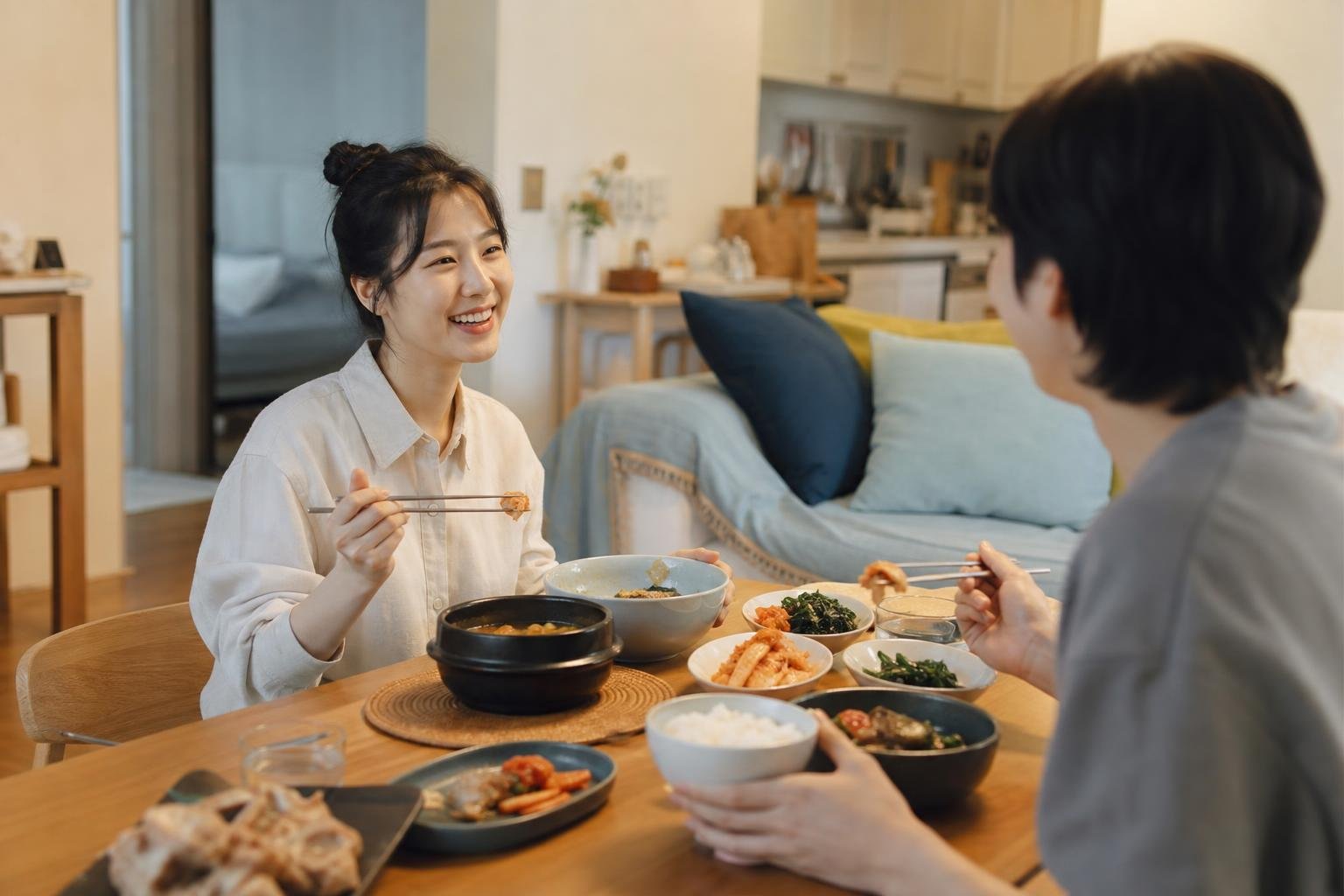
Friends at a Korean dinner table noticing that the evening is winding down

Nunchi (눈치, roughly noon-chee) means the ability to recognize another person’s feelings or understand a situation without being told directly. “Reading the room” is the closest everyday English equivalent, but nunchi also concerns timing and how you respond to what you notice. The National Institute of Korean Language defines it as understanding someone’s mind or … Read more

Why Convenience Stores Matter So Much in Everyday Korean Life

Illuminated convenience store beside apartment buildings on a Korean residential street at night

In South Korea, the convenience store is important because it fills small but frequent gaps in daily life. It can provide breakfast before an early commute, dinner after a late shift, an emergency umbrella, parcel shipping, an ATM, or simply somewhere to sit with a cup of noodles. By combining food, retail, and practical services … Read more

Why Koreans Use Job Titles Instead of Saying “You”

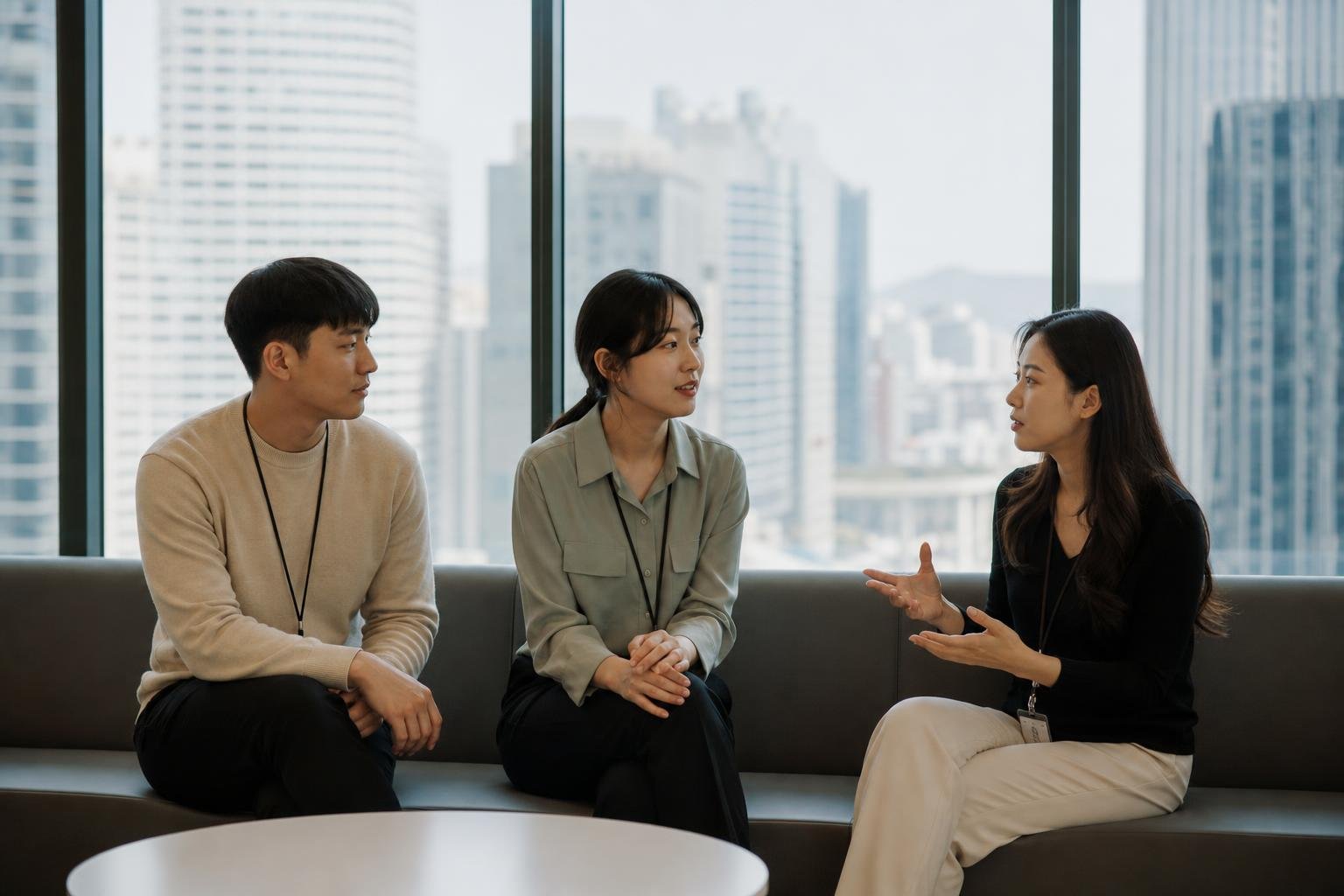
Korean team members addressing a colleague during an office meeting

Korean speakers often use a job title where English would use “you” because Korean has no single, neutral second-person pronoun that is polite and natural across relationships. A form such as 팀장님 (timjangnim, team leader) identifies the listener while acknowledging that person’s role. Korean also readily omits subjects and objects, so the most natural equivalent … Read more

What Are Chaebol? How Family-Controlled Conglomerates Shape Korean Life

Seoul business district with towers displaying several major Korean corporate brands

Chaebol are large South Korean business groups whose many legally separate companies are coordinated under common control, usually with a founding family at the center. Samsung, SK, Hyundai Motor, LG, Lotte, Hanwha, and CJ are well-known examples. Calling them “family-owned conglomerates” is convenient but slightly misleading. The controlling family rarely owns every affiliate—or even a … Read more