
Koreans may ask your age because it provides a quick clue about how the relationship should work in Korean: which speech style to use, what to call each other, and whether an age-based peer relationship is possible. The underlying question is often less “How old are you?” than “How should we speak to each other?”
Age is only one clue. Familiarity, professional position, school or workplace seniority, the setting, and personal preference may matter just as much—or more. Not every Korean asks, and an abrupt age question can still feel intrusive.
Age helps speakers choose how formal to be
Korean speakers continually make choices through sentence endings, honorific vocabulary, titles, names, and forms of address. These choices reflect both social position and interpersonal distance, so age alone cannot dictate the correct language. Linguistic research describes Korean speech-level choice as dynamic and sensitive to factors including age, status, intimacy, and conversational context. ([researchwithrutgers.org](https://www.researchwithrutgers.org/en/publications/linguistic-politeness-in-korean-speech-levels-and-terms-of-addres/?utm_source=openai))
존댓말 (jondaetmal) is the everyday umbrella term for respectful or polite speech. 반말 (banmal) refers to informal, non-polite speech used in relationships where that style is accepted. The National Institute of Korean Language’s learner dictionary notes that even adults of the same age generally do not use banmal merely because they are age peers if they are not yet close. ([krdict.korean.go.kr](https://krdict.korean.go.kr/eng/dicSearch/SearchView?ParaWordNo=15843&utm_source=openai))
That distinction explains why two adults commonly begin a first meeting in polite Korean, even after learning that they were born in the same year. A younger manager may receive polite language from an older employee. Colleagues may maintain mutual politeness regardless of age. Close friends with an age difference may use informal speech, but that pattern comes from the relationship—not from a mathematical rule.
For a Korean learner, the reliable default is therefore simple: start with polite speech. Do not switch to banmal simply because the other person is younger.
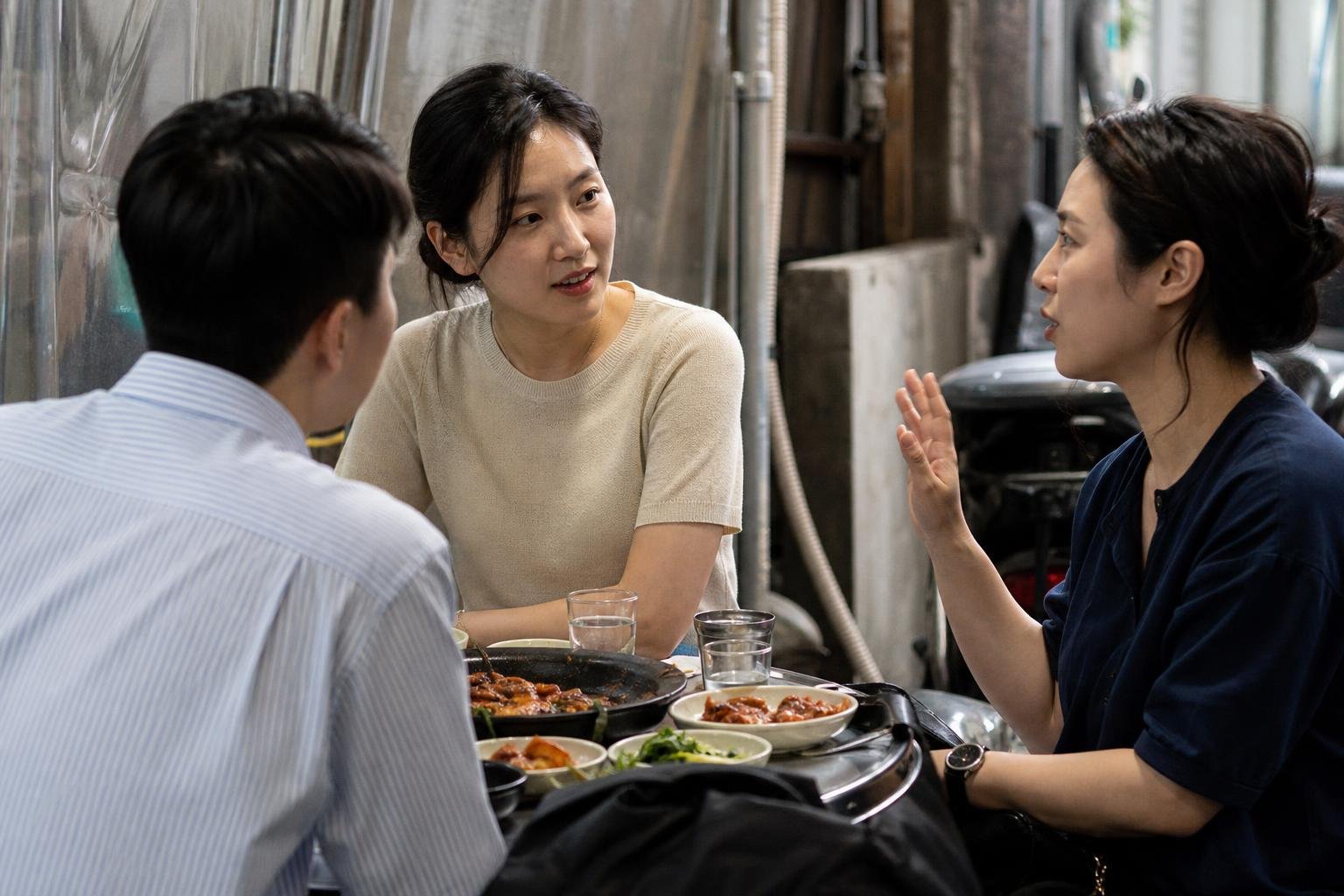
Why people often ask for your birth year
Rather than requesting a precise age, someone may ask:
몇 년생이세요?
Myeot nyeonsaeng-iseyo?
“What year were you born?”
Another polite, though still personal, formulation is:
실례지만, 나이가 어떻게 되세요?
Sillyejiman, naiga eotteoke doeseyo?
“Excuse me, may I ask your age?”
Birth year is convenient because informal Korean peer groupings have commonly followed calendar-year cohorts. People born in the same year may describe themselves as 동갑 (donggap), or the same age, without comparing whether each birthday has passed. The related word 동갑내기 means people of the same age. ([krdict.korean.go.kr](https://krdict.korean.go.kr/eng/dicSearch/SearchView?ParaWordNo=48852&blockCount=10¤tPage=1&exaType=&mainSearchWord=%EB%8F%99%EA%B0%91&myViewWord=71694&nation=eng&nationCode=6&proverbType=&searchType=W&sort=W&viewType=A&viewTypes=on&wordMatchFlag=N&utm_source=openai))
This convention is not perfectly tidy. School cohort, early or delayed enrollment, and individual habits can complicate how people understand age-based relationships. Birth year is a useful social shortcut, not a complete account of someone’s status.
A: 실례지만, 몇 년생이세요?
“Excuse me, what year were you born?”B: 저는 1995년생이에요.
“I was born in 1995.”A: 저도요. 우리 동갑이네요.
“Me too. We’re the same age.”
The speakers may still continue in jondaetmal. Discovering that they are donggap opens the possibility of an age-peer relationship; it does not instantly make them close friends.
Does 친구 mean an equal-age friend?
친구 (chingu) usually means “friend,” but it does not map perfectly onto the English word. Its primary dictionary meaning is someone with whom one has a close relationship. The word can also be used familiarly or downward toward someone of a similar age or younger. ([krdict.korean.go.kr](https://krdict.korean.go.kr/kor/dicSearch/SearchView?ParaWordNo=29742&utm_source=openai))
In everyday relationship-building, chingu is strongly associated with age peers. A Korean speaker may call a close older person eonni, hyeong, nuna, or oppa rather than placing that person in the same social category as a same-age friend. However, this is a cultural tendency rather than an absolute dictionary restriction. People use chingu broadly in some contexts, and individual preferences vary.
When same-age acquaintances want to speak more casually, one may ask:
우리 말 놓을까요?
Uri mal noeulkkayo?
“Shall we speak casually with each other?”
말 놓다 is an idiom for dropping polite speech or becoming linguistically less formal. Asking first is more considerate than suddenly removing polite endings.
Age can affect forms of address—but does not assign them automatically
Age and the genders of the speakers can help identify whether certain relationship terms might eventually be appropriate:
- 형 (hyeong): used by a younger male for an older male
- 언니 (eonni): used by a younger female for an older female
- 누나 (nuna): used by a younger male for an older female
- 오빠 (oppa): used by a younger female for an older male
Outside a family, these terms normally imply an accepted degree of familiarity. A Korean who is two years older than you does not automatically become your oppa or eonni. Let the relationship develop, and follow the person’s preference rather than assigning a family-like title immediately.
Titles are often more important in institutional settings. At work, 팀장님 (timjangnim, team leader), another position title, or a workplace-approved form of address may be more appropriate than an age-based term. A younger supervisor remains the supervisor, and an older employee does not gain automatic permission to use banmal.
Age, rank, and seniority are separate
Korean social relationships can involve several overlapping systems. 선배 (seonbae) and 후배 (hubae) refer to senior and junior members of a school, organization, profession, or shared field. These relationships are based primarily on entry, experience, or participation—not biological age. The official learner dictionary likewise defines a senior in a field through earlier activity and greater experience. ([krdict.korean.go.kr](https://krdict.korean.go.kr/eng/dicSearch/SearchView?ParaWordNo=49426&utm_source=openai))
A student who entered a university department earlier can be the seonbae of an older student. A younger colleague may have a higher position or more responsibility. When age, role, and experience point in different directions, speakers often rely on titles and mutual polite speech rather than trying to rank the entire person.
What the 2023 age reform actually changed
South Korea’s revised Civil Act and General Act on Public Administration introduced explicit provisions standardizing civil and administrative age as 만 나이 (man nai): age counted from birth and increased on each birthday. The provisions took effect on June 28, 2023, while allowing separate laws to prescribe another method for particular purposes. ([law.go.kr](https://www.law.go.kr/LSW/lsSideInfoP.do?docCls=jo&joBrNo=00&joNo=0158&lsiSeq=284415&urlMode=lsScJoRltInfoR&utm_source=openai))
The reform did not legally regulate private friendships or abolish awareness of birth years. It also did not convert every age-related rule to birthday-based counting; areas with specific statutory standards can remain exceptions. ([moleg.go.kr](https://www.moleg.go.kr/board.es?act=view&bid=0048&list_no=135757&mid=a105010-00000&utm_source=openai))
This official system differs from 세는나이 (seneun nai), often called “Korean age,” in which a person was considered one at birth and everyone added a year on January 1. It is also distinct from the social habit of comparing birth years. Someone can use man nai on official documents while still asking a new acquaintance what year they were born.
When asking age feels rude
Cultural familiarity does not make every age question appropriate. It may feel intrusive when a stranger asks without context, when the information is irrelevant, or when age is being used to claim authority. People may also avoid disclosing it because of privacy, workplace discrimination, dating expectations, or assumptions about marriage and other life milestones.
The same question can land differently in different settings. Students establishing how to address one another may view it as practical. At a business meeting, professional role may already supply all the information needed. International groups and some younger social circles may avoid age-based sorting or continue using polite speech even after ages are known.
How to answer—or politely avoid the question
If you are comfortable answering, giving your birth year is often clearer than calculating which age system the other person has in mind:
1995년생이에요.
“I was born in 1995.”
You can give a broader range without revealing the exact year:
1990년대생이에요.
“I was born in the 1990s.”
For a light, social response, you might say:
나이는 비밀이에요.
Naineun bimirieyo.
“My age is a secret.”
A clearer boundary is:
정확한 나이는 말씀드리지 않을게요.
“I’d rather not give my exact age.”
Answering does not mean that you have agreed to be ranked or addressed casually. You can continue using polite Korean and follow the titles or forms of address already used in the group. For visitors and learners, that is more useful than trying to memorize a rigid hierarchy: treat age as one piece of relationship information, begin politely, and let greater informality develop by mutual agreement.