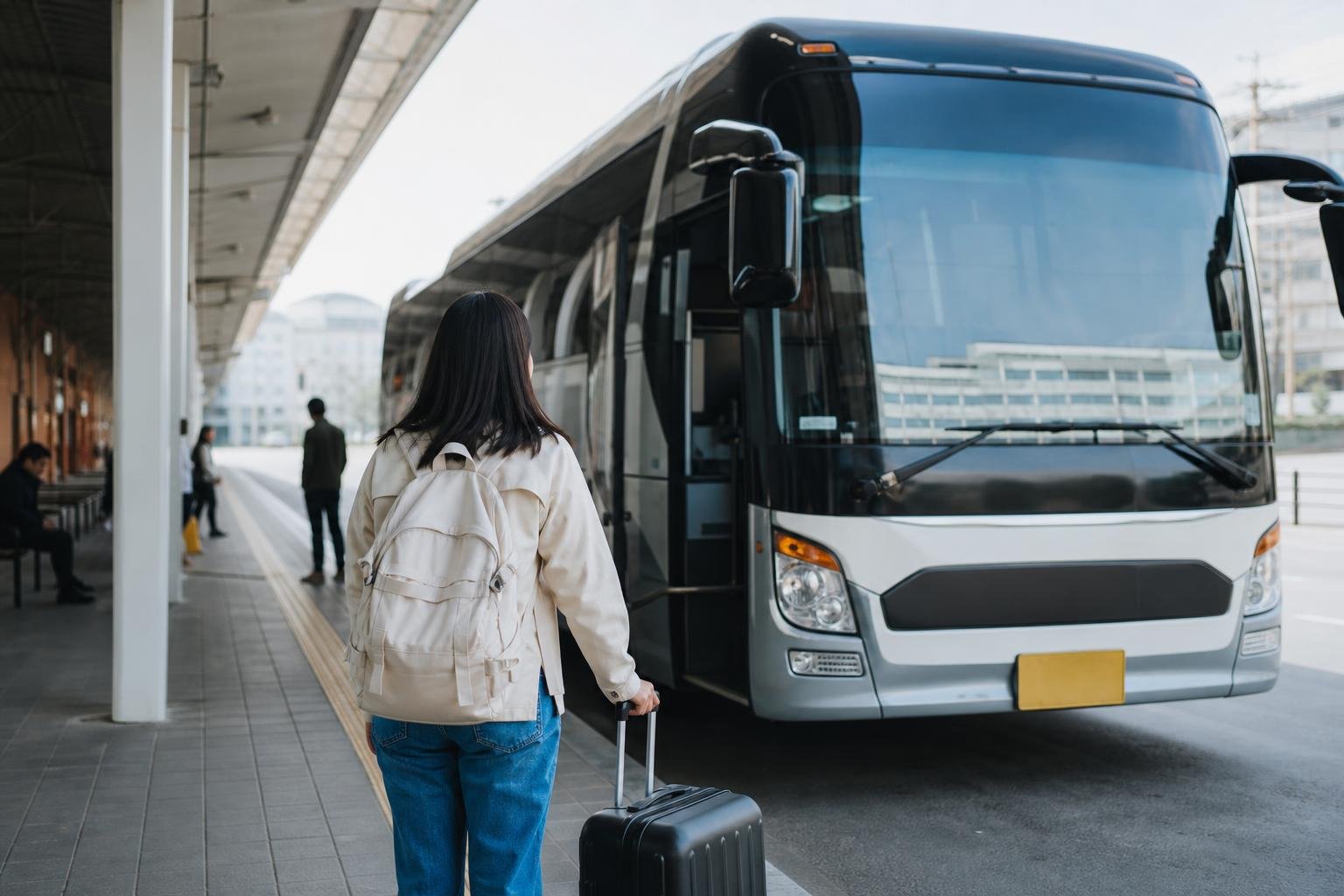
The short version: search for your route before choosing a terminal, because Korea’s express and intercity bus systems may list different departures—and may use different terminals in the same city. Reserve a specific bus and seat, check the full departure-terminal name, and arrive early enough to find the correct boarding bay.
Long-distance buses are especially useful for regional cities, coastal destinations and towns without convenient rail connections. A train may be faster between major stations, but a direct bus can produce the shorter door-to-door journey when rail requires a transfer. source
Express bus or intercity bus?
Korean long-distance services are commonly divided into express buses (고속버스, gosok beoseu) and intercity buses (시외버스, sioe beoseu).
- Express buses generally travel between major terminals, use expressways for much of the journey and do not normally make intermediate city stops.
- Intercity buses cover a wider variety of cities and towns. Depending on the route, they may run nonstop or call at one or more intermediate terminals.
The legal and operational categories matter to bus companies, but travelers should focus on the actual itinerary: departure terminal, destination terminal, intermediate stops, journey time and schedule. An intercity bus is not necessarily slower, less comfortable or less direct for the trip you need. source
Seat classes also vary by route. Common labels include 일반 (ilban, standard), 우등 (udeung, deluxe) and 프리미엄 (peurimieom, premium). Deluxe buses typically have fewer, wider seats than standard buses. Premium vehicles provide more personal space and additional seat features, but they operate only on selected departures. source
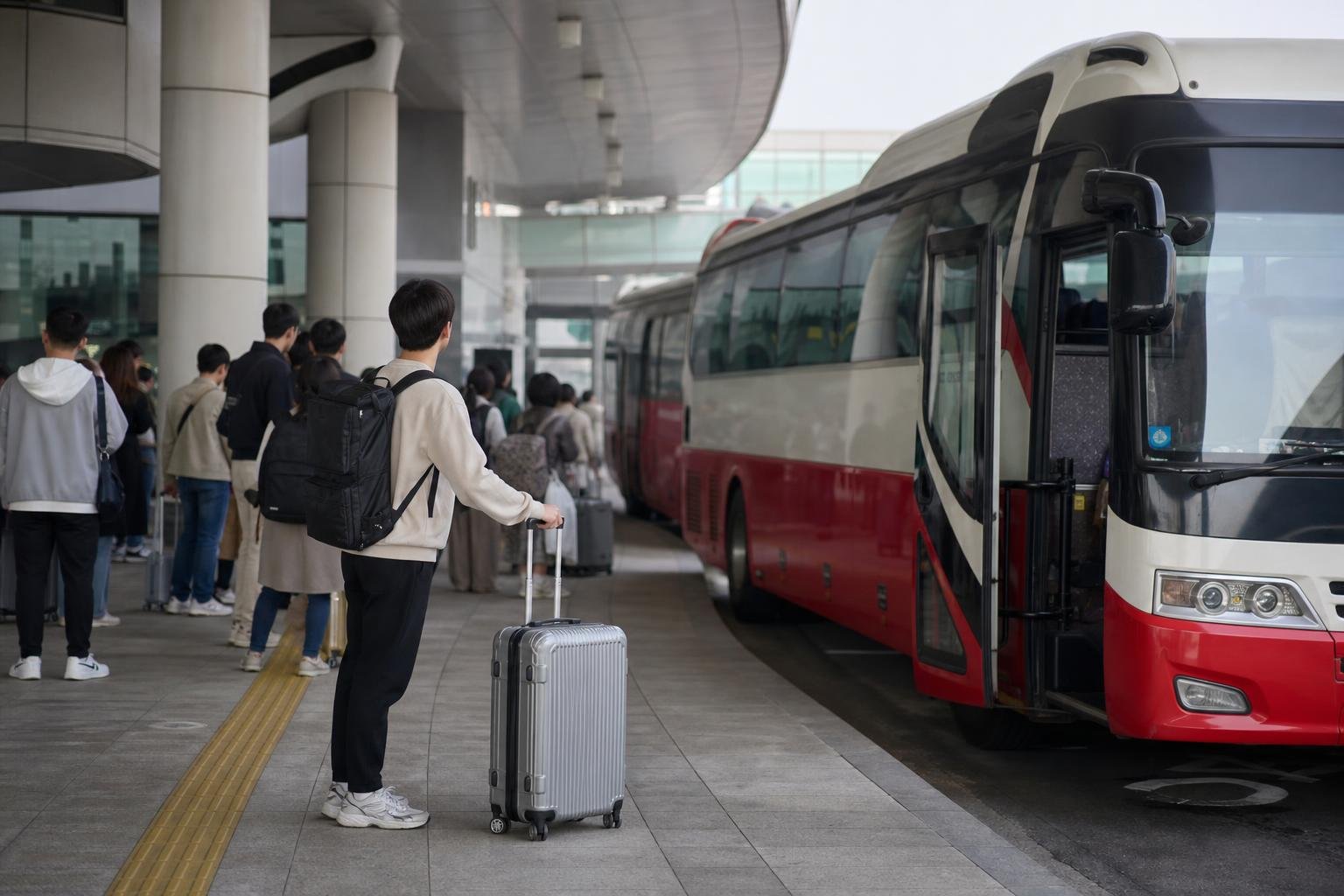
Check the exact terminal—not merely the city
A booking labeled “Seoul” or “Busan” is not enough information. Large cities may have separate terminals, and a route available at one terminal may not operate from another. A terminal with 종합 (jonghap, integrated or comprehensive) in its name may handle both express and intercity services, but you must still check the individual departure.
Seoul illustrates the problem:
- Seoul Express Bus Terminal handles Gyeongbu and Yeongdong corridor services. It is connected to Express Bus Terminal Station on subway Lines 3, 7 and 9.
- Central City Terminal, beside the Seoul Express Bus Terminal complex, primarily handles Honam corridor services toward southwestern Korea. It uses the same subway station.
- Dong Seoul Terminal is beside Gangbyeon Station on Line 2 and serves a broad range of regional destinations.
- Seoul Nambu Terminal is beside Nambu Bus Terminal Station on Line 3 and operates many intercity routes.
These distinctions remain important even when two buildings are adjacent. Seoul Express Bus Terminal and Central City Terminal, for example, are part of the same large commercial area but have different departure halls and route groups. source
Planning example: Seoul–Sokcho services can be available from both Seoul Express Bus Terminal and Dong Seoul Terminal. Compare the live schedule rather than automatically going to whichever terminal is closest to your hotel. Departure frequency and travel time can change, so recheck for your chosen date. source
Where and how to book
The principal domestic systems are Kobus for express buses and Tmoney Intercity Bus or Bustago for intercity services. One system may show no results even though another network serves the destination, so search both categories when planning an unfamiliar route. These services provide multilingual interfaces, although route coverage, account requirements and payment performance can differ. source
International travelers can also book eligible services through Klook and GoHanpass, which support foreign-issued cards and multiple languages. Korea Tourism Organization guidance also indicates that foreign-issued cards are accepted at express and intercity bus terminal counters and ticket machines. Not every route appears on every platform, so buying at the terminal remains necessary for some departures. source
- Select the precise departure terminal and arrival terminal.
- Check whether the service is nonstop or has intermediate stops.
- Choose the date, departure time, passenger category and seat.
- Confirm the bus class and scheduled journey time before paying.
- Save the reservation number and ticket instructions. Depending on the route and booking method, you may receive a mobile ticket or need to issue a paper ticket at the terminal.
For busy Friday evenings, weekends and public holidays, advance booking is sensible. Seollal and Chuseok are particularly competitive travel periods; reservation-release dates and special schedules are announced separately, rather than following one permanent annual timetable.
At a counter, showing the destination in Korean is usually sufficient. A useful request is:
강릉 가는 표 한 장 주세요.
Gangneung ganeun pyo han jang juseyo.
“One ticket to Gangneung, please.”
If several departures are available, show the time you want. Staff may ask you to choose between 일반 and 우등 when both classes operate.
Do not assume that boarding works like a local city bus. Long-distance buses are normally reserved, ticketed journeys with assigned seats, rather than services on which you simply tap a T-money card.
Finding and boarding your bus
Arrive about 20 to 30 minutes early when using an unfamiliar terminal, collecting a ticket or carrying a large bag. This is a practical buffer rather than a formal requirement. In a large terminal, finding the correct building or departure hall can take longer than expected.
Check the electronic departure board even if a bay number appears in your reservation. Useful Korean terms include:
- 출발지 (chulbalji): departure point
- 도착지 (dochagji): destination
- 출발시간 (chulbal sigan): departure time
- 승차홈 or 승강장 (seungcha hom / seunggangjang): boarding bay or platform
- 좌석번호 (jwaseok beonho): seat number
Boarding commonly begins about five to ten minutes before departure. Have the QR code or paper ticket ready, verify the destination displayed on the bus and sit in your assigned seat. source
If several buses are loading nearby, show your ticket to the driver or ask:
이 버스 속초 가요?
I beoseu Sokcho gayo?
“Does this bus go to Sokcho?”
Luggage, rest stops and arrival times
Keep a small bag with you and place ordinary suitcases or large backpacks in the underfloor luggage compartment. Korean intercity buses are required to provide storage for passenger belongings, but oversized, unusually heavy or hazardous items may be refused under operator rules. Ask before traveling with bicycles, large sports equipment or multiple bulky cases. source
Keep your passport, wallet, medication, electronics and other valuables in the cabin. If your bus makes intermediate terminal stops, tell the driver where you are getting off when loading a bag, particularly if luggage is being arranged by destination.
Korean long-distance buses generally do not have onboard restrooms. Medium- and long-distance services normally pause at a highway service area, or 휴게소 (hyugeso), where toilets, convenience stores and food counters are available. Listen carefully for the return time, note where the bus is parked and return promptly; many similar-looking buses may be using the service area. source
Scheduled arrival times can shift because of urban traffic, weather, holiday congestion or the length of a rest stop. Avoid a tight connection to a flight, the last local bus or a separately booked train. A bus is often the most direct option in Korea, but its greatest advantage is access—not immunity from road traffic.