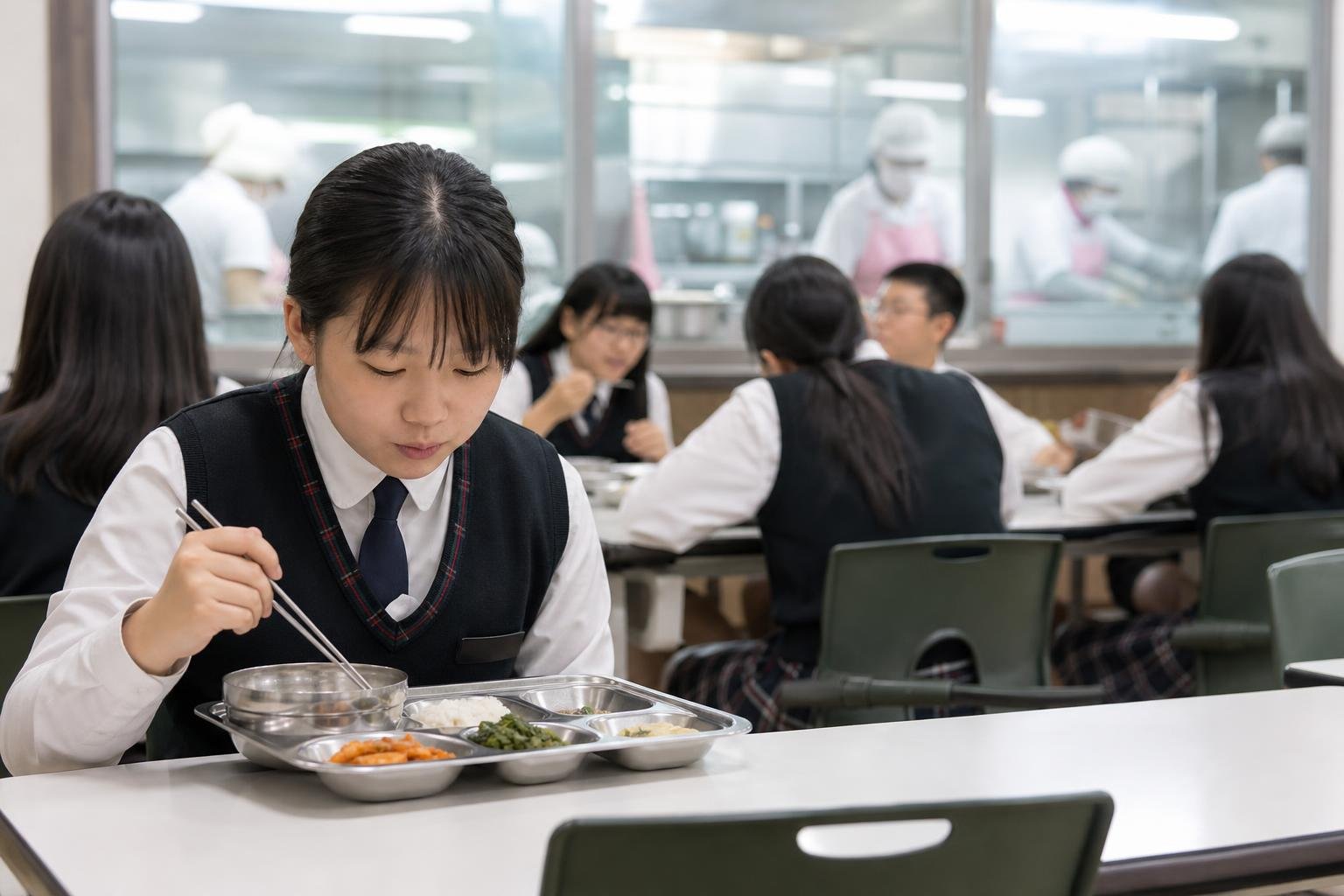
Korean school lunch is usually a planned meal served during the school day, not a cafeteria purchase made one item at a time. In public elementary, middle, and high schools, students commonly receive geupsik (급식), a set meal prepared or arranged by the school. For international families, the important questions are how the menu is shared, whether lunch is covered by local funding, and how the school will handle allergies, religious diets, medical restrictions, or foods your child cannot eat.
There is no single arrangement that applies to every school in South Korea. Public schools generally follow local education-office policies, while private, international, alternative, boarding, and specialized schools may use different menus, payment systems, or accommodation procedures. Confirm the details directly during enrollment rather than relying on another family’s experience.
Ask about school lunch during enrollment
Lunch arrangements are usually explained through the school’s enrollment materials, parent orientation, school website, mobile app, or notices sent after registration. If information is only available in Korean, ask the school office or homeroom teacher for help before your child’s first day.
These are the most useful questions to ask:
- Is regular lunch served every instructional day?
- Is lunch funded, or must parents pay a monthly or per-meal fee?
- Does the policy apply to this school type and grade?
- Are breakfast, dinner, snacks, vacation meals, or dormitory meals charged separately?
- Where is lunch served: a cafeteria, classroom, or both?
- How are menus and last-minute changes communicated?
- Who handles allergies, food restrictions, or a request for a packed lunch?
In many mainstream public schools, regular weekday lunch is funded through metropolitan or provincial education programs. This does not necessarily include meals during vacations, camps, evening programs, weekends, or residential programs. Private and international schools may set their own charges and may use an outside catering company. Request the school’s written policy if the fee is important to your family budget.
What children usually eat
A typical tray may include rice or another grain, soup or stew, a main dish, several side dishes, and kimchi. Fruit, yogurt, bread, or another dessert may also be served. Milk may be part of a separate school milk program rather than the lunch itself.
Menus vary widely. A child might receive multigrain rice, seaweed soup, chicken, seasoned vegetables, kimchi, and fruit one day, then curry rice, noodles, dumpling soup, bibimbap, pasta, or a cutlet-style dish another day. School meals are not limited to traditional Korean food, although Korean ingredients and cooking styles are common.
Students normally eat from a compartmented stainless-steel tray and return it after the meal. Depending on the school, children may eat in a dining hall, in classrooms, or in shifts when seating is limited. Portion control also varies: some schools allow students to request less of a dish, while others serve most items in fixed portions.
If your child has sensory sensitivities, swallowing difficulties, anxiety around unfamiliar foods, or a very limited diet, discuss this before enrollment. A school may be able to adjust part of a meal, but it may not provide an individualized menu every day.
How to find and understand the menu
The monthly menu is usually called a sikdanpyo (식단표). Schools may publish it on their website, send it through a parent app or messaging service, or distribute it as a home notice. Menus commonly list the dishes for each date, allergen numbers, calories or nutrient information, and the country of origin for certain regulated ingredients.
Look for a legend explaining the allergen numbers. The standard list commonly includes:
- Eggs
- Milk
- Buckwheat
- Peanuts
- Soy
- Wheat
- Mackerel
- Crab
- Shrimp
- Pork
- Peach
- Tomato
- Sulfites
- Walnut
- Chicken
- Beef
- Squid
- Shellfish such as oysters, abalone, and mussels
- Pine nuts
For example, a dish marked “1.5.6” may contain egg, soy, and wheat. Always use the legend on the current menu because numbering, formatting, and translations may differ between school systems or older documents. A dish name alone is not enough to identify every ingredient: soup stock, sauces, noodles, dumpling fillings, and kimchi seasoning may contain ingredients that are not obvious from the English translation.
Allergies need a plan beyond the menu
Allergen numbers help families screen the menu, but they do not automatically mean that the school has a separate kitchen, substitute meal, or zero-contact preparation area. For a serious allergy, contact the homeroom teacher and the school’s nutrition teacher or dietitian before your child starts eating school meals.
Prepare a short written explanation that includes:
- The exact allergen or allergens.
- Whether trace exposure or cross-contact is dangerous.
- The child’s previous symptoms and reaction severity.
- Any prescribed medication and emergency instructions.
- Whether the child can safely eat selected components of the meal.
Ask the school specifically whether it can remove an ingredient, provide a substitute, arrange a safer alternative, or permit a packed lunch. Also ask how recipe substitutions and last-minute menu changes will be communicated. Do not send outside food without agreement, since the school may have rules about storage, supervision, and shared food.
아이에게 땅콩과 달걀 알레르기가 있습니다. 영양교사와 급식의 알레르기 표시, 대체식 가능 여부, 응급 대응 절차를 상담하고 싶습니다.
This means: “My child has peanut and egg allergies. I would like to discuss the allergen labeling, whether a substitute meal is possible, and the emergency response procedure with the nutrition teacher.”
Vegetarian, halal, kosher, and medical diets
International families should explain dietary requirements precisely. A meal without visible meat is not necessarily vegetarian: broth, kimchi, sauces, dumplings, and side dishes may include fish, shellfish, meat, or animal-derived ingredients. Removing pork does not automatically make a meal halal, and an ordinary school kitchen should not be assumed to provide kosher preparation.
Some schools can omit a particular component or offer a limited substitute. Others may permit a parent-provided lunch when the regular meal cannot meet a medical or religious requirement. Fully separate preparation may not be possible because of staffing, kitchen design, purchasing arrangements, or contamination concerns.
Medical diets involving texture modifications, prescribed formulas, severe intolerances, or feeding equipment require an individual plan. Include the school nurse when medication or emergency care is involved, and ask for written confirmation of who supervises the child during lunch.
Who to contact when something goes wrong
The nutrition teacher or dietitian is usually the best contact for ingredients, allergen labeling, menu substitutions, portions, sanitation, and meal planning. The homeroom teacher handles practical issues such as lunch supervision, whether the child understands the restriction, and what happens if the child refuses or trades food. The school nurse should be involved in medical emergencies and prescribed treatment.
If the menu changes unexpectedly, save the original notice and record the date, dish, and concern. A specific message—such as “The menu changed on September 8, 2026, and the substitute soup may contain milk”—is easier for the school to investigate than a general statement that lunch is unsafe.
Before the first week, save the current menu, review unfamiliar dish names with your child, and teach them which adult to approach. Most international families can rely on the school’s normal lunch system once the arrangements are clear. Allergies, religious diets, and medical restrictions, however, should be agreed in advance rather than left to assumptions about what Korean school lunch usually contains.