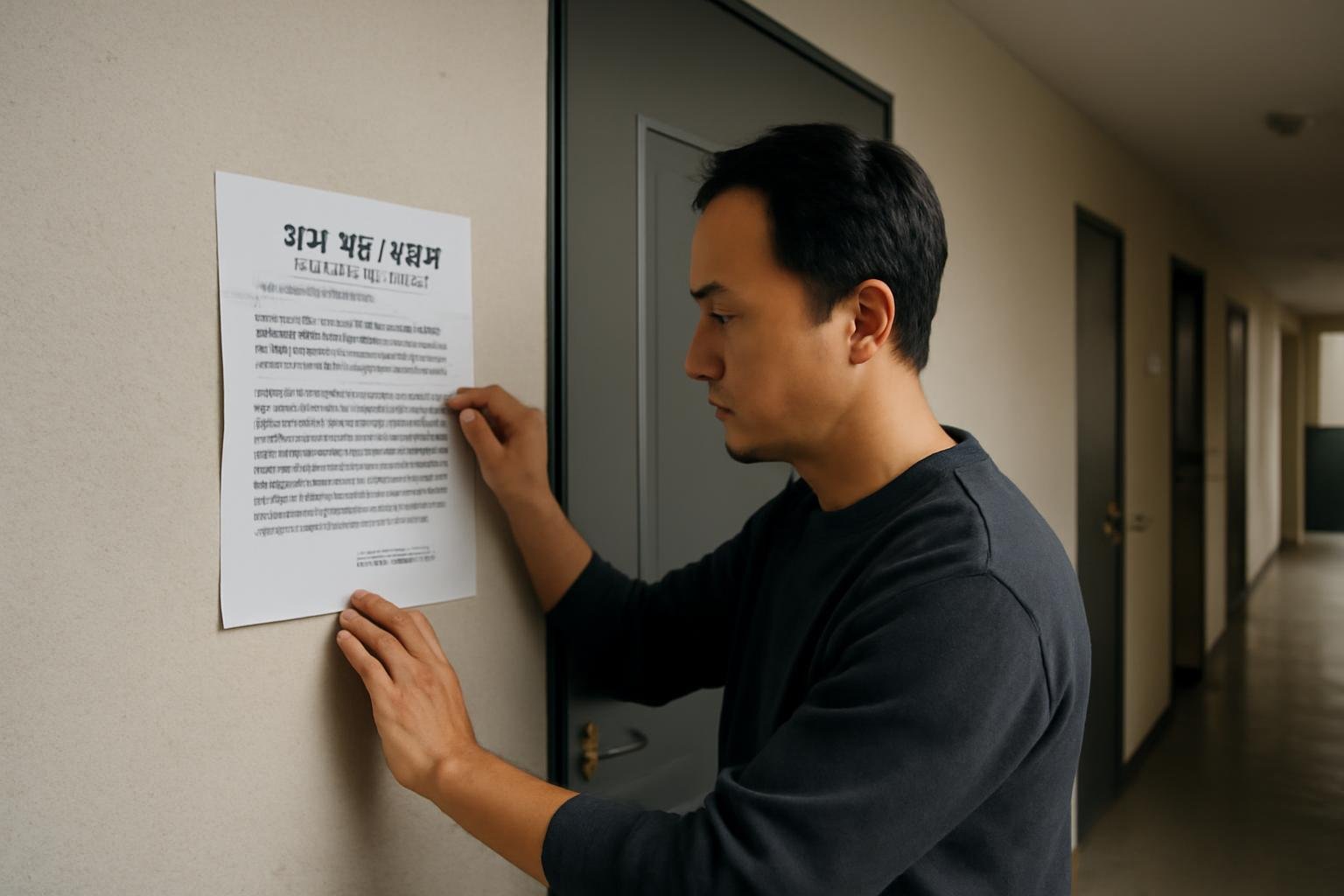
If you live in a Korean apartment, the notice board, elevator, mailbox, or building app may regularly display announcements about inspections, repairs, cleaning, water shutoffs, parking, and maintenance fees. These notices can look formal and difficult at first, but most follow a predictable pattern.
The key point is that a Korean apartment maintenance notice usually tells residents what will happen, when it will happen, which buildings or households are affected, and what residents need to do. It may be issued by the 관리사무소 (gwan-ri-sa-mu-so), the apartment management office, or by a contractor working on the complex’s behalf.
Who issues Korean apartment notices?
The management office is usually called the 관리사무소 (관리사무소, gwan-ri-sa-mu-so). It handles the shared facilities and day-to-day administration of an apartment complex, including elevators, parking areas, landscaping, security, recycling areas, common utilities, and maintenance fees.
Notices may also come from:
- 입주자대표회의 (ipjuja daepyohoeui): the residents’ representative committee
- 시설관리업체 (siseol gwanri eopche): a facilities-management contractor
- 전기안전관리자 (jeongi anjeon gwanrija): an electrical safety manager
- 소방시설 점검업체 (sobang-siseol jeomgeom-eopche): a fire-safety inspection company
The name of the issuing organization is often printed near the bottom, together with a telephone number. If you are unsure whether an announcement applies to you, the management office is normally the best first contact.
The most important words to recognize
Learning a small set of recurring terms makes apartment notices much easier to scan.
- 점검 (jeomgeom): inspection or safety check
- 공사 (gongsa): construction or repair work
- 보수 (bosu): repair or maintenance
- 교체 (gyoche): replacement
- 청소 (cheongso): cleaning
- 소독 (sodok): disinfection or pest-control treatment
- 정전 (jeongjeon): power outage
- 단수 (dansu): water shutoff
- 운행 중지 (unhaeng jungji): suspension of operation, often for an elevator
- 출입 (churip): entry or access
- 협조 (hyeopjo): cooperation requested from residents
- 불편을 드려 죄송합니다: “We apologize for the inconvenience,” a standard polite closing
One useful distinction is between 점검 and 공사. A 점검 is generally an inspection or test; the equipment may continue working, although an elevator, water supply, or other service might be temporarily affected. 공사 indicates physical work and often means noise, restricted access, dust, or a longer disruption.
How to read the date and time
Apartment notices usually state the schedule near the beginning. Korean dates are commonly written in year-month-day order:
2026년 9월 18일(금) 09:00~17:00
This means Friday, September 18, 2026, from 9:00 a.m. to 5:00 p.m. The symbols ~ or 부터 … 까지 indicate a time range. If the notice says 우천 시 연기 (ucheon si yeongi), the work may be postponed in case of rain.
Watch for these schedule words:
- 예정: scheduled or planned
- 일시: date and time
- 기간: period or duration
- 순차적으로: in sequence, one section after another
- 별도 안내: additional notice will follow
- 변경될 수 있음: may be subject to change
When work is carried out “sequentially,” it may not affect every building at the same time. Look for a building number, line number, floor range, or apartment unit range.
Common maintenance notices and what they involve
Water shutoffs
A notice about 단수 may concern the entire complex, one building, or only particular floors. It may ask residents to store enough water in advance and to avoid using faucets during the work period.
Useful phrases include:
- 급수 중단: water supply will be stopped
- 저수조 청소: water tank cleaning
- 녹물이 나올 수 있습니다: discolored or rusty-looking water may come out
- 물을 잠시 흘려보낸 후 사용하시기 바랍니다: please let the water run briefly before use
If the notice mentions possible discoloration after work, residents are often being advised to run cold water until it clears. For drinking or appliance use, follow the specific instructions in the notice or ask the management office if the water remains cloudy.
Elevator inspections and repairs
Elevator notices often use 승강기 (seungganggi), the formal word for elevator, rather than the more conversational 엘리베이터. 승강기 정기검사 means a regular elevator inspection.
A notice may say:
점검 기간 동안 해당 승강기 운행이 중지됩니다.
“The affected elevator will stop operating during the inspection period.” If several elevators serve the same building, the notice may identify a specific elevator by number. It may also recommend that residents use another elevator or the stairs.
Fire-safety inspections
Fire-safety notices commonly mention 소방시설 (fire-protection facilities), 화재감지기 (fire detector), 스프링클러 (sprinkler), or 소화전 (fire hydrant). Some inspections involve common areas only; others require workers to enter individual units.
If the notice says 세대 방문 or 세대 내 점검, technicians need access to apartments. 부재 시 means “if you are absent.” The notice may ask residents to leave a key with the management office, arrange a different time, or contact the office in advance. Do not assume that every access request is optional: check whether the notice describes a legally or administratively required safety inspection, a building-wide test, or a voluntary service visit.
Gas, electrical, and heating work
Terms such as 전기시설 (electrical facilities), 가스시설 (gas facilities), 난방 (heating), and 보일러 (boiler) may appear in seasonal notices. Work can involve a temporary shutdown, access to a meter room, or testing of equipment.
난방 공급 중단 means heating service will be interrupted. In central-heating buildings, a notice may explain that radiators or hot water will be unavailable during a specified period. This is especially important during seasonal maintenance, when residents may need to plan around showers, laundry, or vulnerable household members.
Cleaning, disinfection, and pest control
Notices about 소독, 방역 (disease or pest-control measures), or 수목 소독 (tree and landscaping treatment) may ask residents to keep windows closed, avoid treated areas, or move belongings from balconies and common spaces.
If the notice specifies a chemical treatment, pay attention to instructions about children, pets, food, laundry, and ventilation. The phrase 출입을 삼가 주시기 바랍니다 means “please refrain from entering.”
When a notice asks residents to cooperate
입주민 여러분의 협조 부탁드립니다 is a standard phrase meaning “we ask for residents’ cooperation.” It does not always mean that you must take a major action. The requested cooperation might be as simple as moving a car, keeping a corridor clear, not using an elevator during repairs, or placing recyclables in the correct area.
Look for the specific action verbs:
- 주차를 삼가 주시기 바랍니다: please refrain from parking
- 차량을 이동해 주시기 바랍니다: please move your vehicle
- 창문을 닫아 주시기 바랍니다: please close your windows
- 물건을 치워 주시기 바랍니다: please remove or clear away your belongings
- 신청해 주시기 바랍니다: please apply or register
- 참여해 주시기 바랍니다: please participate
These phrases are polite but can still communicate a real deadline. If a notice gives an exact date or says 미이행 시 불이익—“if not completed, there may be a disadvantage or penalty”—do not treat it as a casual suggestion.
Maintenance fees and payment notices
Apartment maintenance fees are called 관리비 (gwanribi). A notice may explain a change in billing, a payment deadline, an adjustment to a common utility charge, or a new method for receiving statements.
Important terms include:
- 납부기한: payment deadline
- 미납: unpaid amount or arrears
- 연체료: late fee
- 고지서: bill or statement
- 정산: settlement or final calculation
- 공용관리비: management costs for shared facilities
- 사용료: usage charge
A notice about a higher bill may not mean the basic management charge increased. The change could come from seasonal heating, water use, elevator repairs, security services, or another shared expense. Check the itemized statement rather than relying only on the total amount.
What to do when the Korean is difficult
First, identify four things: the affected area, the date and time, the disruption, and the requested action. Then check whether the notice includes words such as 세대 (individual household), 공용부 (shared area), 해당 동 (the affected building), or 전체 (entire complex).
You can ask the management office:
이 공지가 저희 동에도 해당되나요?
“Does this announcement also apply to our building?”
세대 안에 들어오셔야 하나요?
“Do workers need to enter the apartment?”
정확한 시간은 언제인가요?
“What is the exact time?”
If you use a translation app, translate the title and the schedule separately before translating the whole notice. Apartment announcements often contain compressed administrative language, and a full automatic translation may miss which building or unit range is affected.
Notices are part of apartment life
In Korea, the apartment management office is a central communication channel for shared residential life. A notice may be routine, such as an elevator inspection, or immediately practical, such as a water shutoff or request to move a vehicle. Once you recognize recurring words like 점검, 단수, 세대 방문, and 협조, you can usually work out the essential meaning quickly—even before translating every sentence.
The safest habit is to read the heading, schedule, affected buildings or households, and resident instructions first. Those four parts usually tell you whether the notice is merely informational or whether you need to change something at home.