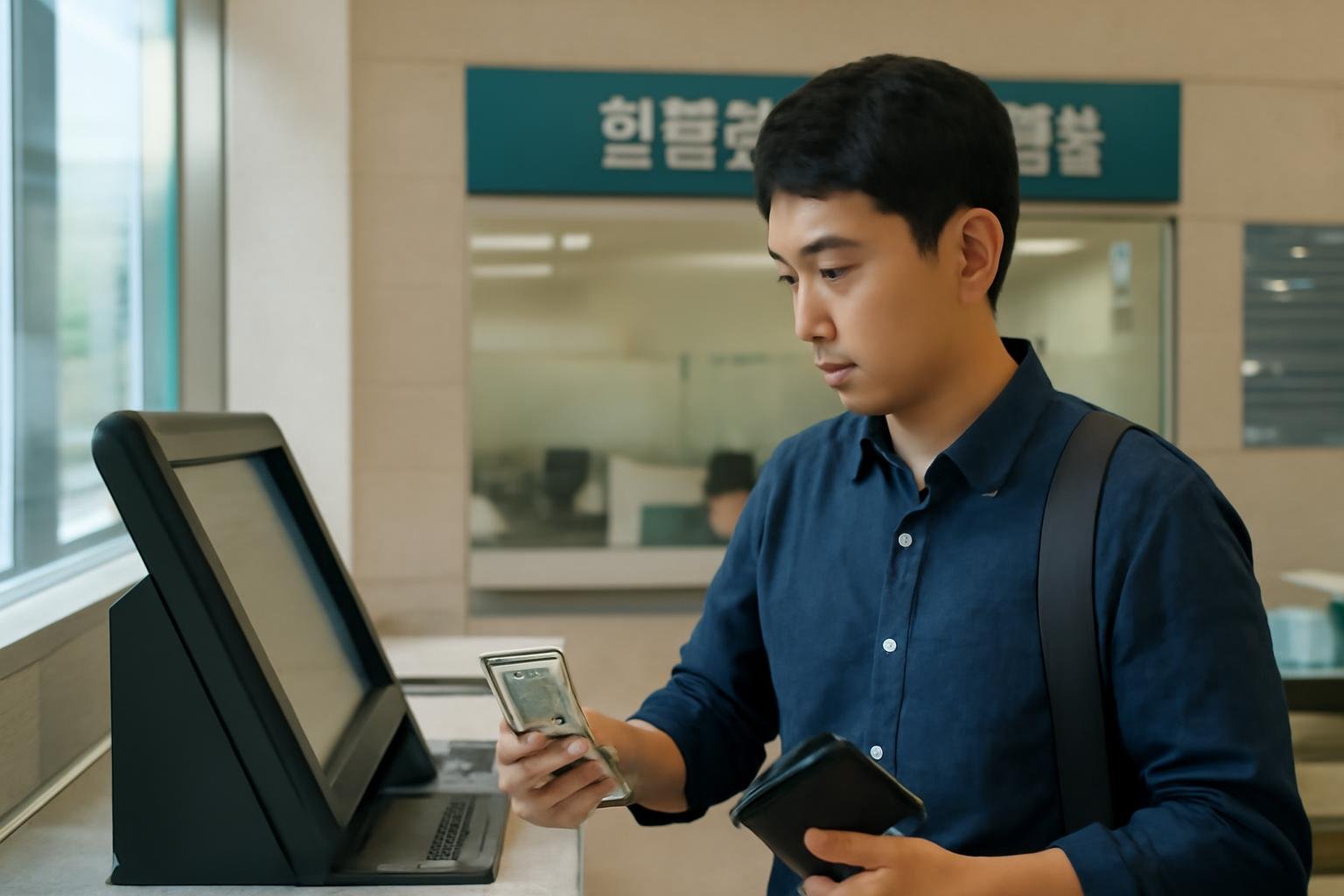
For most foreigners living in South Korea, the best way to send money abroad depends on three things: how much you are sending, how quickly it must arrive, and whether you can complete Korean bank verification. A Korean bank’s overseas remittance service is usually the most straightforward for large or formal transfers. A specialist transfer service may offer a clearer exchange rate and lower overall cost for regular personal payments.
The important comparison is not the advertised transfer fee alone. Check the final amount your recipient receives after the exchange rate, sending fee, intermediary-bank charge, and receiving-bank fee.
Your main options for sending money abroad from Korea
1. A Korean bank international wire
You can send money through the overseas remittance function in your Korean bank app, internet banking, or a branch. Depending on the bank and your account status, the app may require prior registration of the recipient or an approved overseas remittance bank.
A bank wire is often the safest default for:
- large transfers;
- tuition, rent deposits, or other payments requiring formal documentation;
- transfers to a company or institution;
- situations where you need a bank-issued transaction record.
You will normally need the recipient’s full legal name, account number or IBAN where applicable, bank name and address, and SWIFT/BIC code. Korean banks may also ask for the reason for the transfer and supporting documents, particularly for larger or unusual transactions. InvestKOREA’s guidance lists the remitter’s and recipient’s contact details, bank information, account number, SWIFT code, and bank code among the basic information used for overseas remittance. source
Advantages: familiar banking protections, good suitability for large sums, and an in-person fallback at a branch.
Disadvantages: more paperwork, less predictable total cost, possible Korean-language menus, and extra charges from intermediary or receiving banks.
2. A specialist transfer service
Services such as Wise let you set up the transfer online or in an app, see the exchange rate and fee before confirming, and send the recipient’s money to a local bank account. Wise says its pricing uses the mid-market exchange rate with an upfront conversion fee; the exact fee varies by amount, currency, and payment method. source
This can be convenient for salary savings, family support, and regular transfers to your own overseas account. In South Korea, availability and limits depend on the currency, destination, account type, and local verification requirements. Wise’s South Korea availability page currently lists international transfers from South Korea to many destinations, but you should check the exact route before relying on it. source
Do not assume that every service accepts a Korean bank account in exactly the same way. You may need to complete identity verification, pay from your own Korean account, or use a Korean phone number for additional checks. Some services also require the recipient’s name to match the bank’s registered name precisely.
Advantages: transparent quotes, convenient tracking, and often competitive exchange rates for ordinary personal transfers.
Disadvantages: verification can delay a first transfer, route-specific limits may apply, and support may be online rather than in person.
3. A remittance provider or foreign-exchange service
Licensed remittance companies and foreign-exchange providers may be useful when you send money frequently or need a particular destination corridor. Some offer multilingual customer service and instructions designed for foreign residents.
Compare them against a bank and a transfer app using the same sending amount and destination. A provider advertising “zero transfer fees” may recover the cost through a weaker exchange rate. Ask for the exact amount the recipient will receive, not simply the service fee.
How to compare the real cost
Use this calculation:
Total cost = sending fee + exchange-rate markup + intermediary-bank charge + receiving-bank charge.
The exchange-rate markup is often the largest hidden cost. For example, a bank may advertise a low wire fee but convert your won at a rate that gives the recipient less foreign currency. Another provider may show a higher visible fee while delivering more overall because it uses a closer-to-market rate.
When comparing services, enter the same:
- amount in Korean won;
- destination country and currency;
- recipient account type;
- payment method;
- delivery speed.
Then record three figures: the amount withdrawn from your Korean account, the amount the recipient receives, and the estimated arrival time. A quote that looks cheap may not include a receiving-bank deduction, while a bank wire may arrive with a correspondent-bank charge taken out along the way.
What you usually need before sending
- Your Korean bank account and identification details.
- Your passport or Alien Registration Card, especially for in-person setup or verification.
- Your overseas bank account information.
- The recipient’s full name exactly as registered with the receiving bank.
- The destination bank’s SWIFT/BIC code or local routing information.
- The purpose of the transfer.
- Supporting documents for certain large, business, tuition, property, or investment-related transfers.
If you are a foreign resident, make sure your bank has your current address, phone number, tax-residency information, and identification details. Missing customer information can leave an account subject to transaction restrictions until the bank updates it. source
Step-by-step: sending through a Korean bank
- Confirm your bank’s route. Check whether overseas remittance is available in the app or whether you must register the recipient at a branch.
- Collect the recipient’s details. Copy the name, account number, address, and SWIFT/BIC directly from the recipient’s bank instructions.
- Choose the fee arrangement. Banks may offer options determining whether the sender, recipient, or both share correspondent-bank charges. The labels vary by bank, so read the Korean explanation carefully.
- Enter the transfer purpose. Choose the closest accurate category. Do not describe a personal transfer as business-related merely to make the form proceed.
- Review the exchange rate and estimated charges. Save the confirmation screen or receipt.
- Track the transfer. If it has not arrived by the bank’s estimate, ask your bank for the payment reference or SWIFT confirmation and give it to the recipient’s bank.
Step-by-step: using a transfer app
- Create an account and complete identity verification before an urgent payment is due.
- Select South Korea as the sending country and enter the destination currency.
- Add the recipient using their exact bank details.
- Compare the fee, exchange rate, recipient amount, and delivery estimate.
- Pay using the method offered for your route, usually a Korean bank transfer or another approved method.
- Watch for verification messages or requests for additional information.
Wise’s general process is to choose the recipient, enter the amount, select a payment method, review the quoted fee and delivery estimate, and then track the transfer in the app. source
Limits, verification, and timing
Do not rely on a single universal “foreigner remittance limit.” The practical limit can depend on your bank, account verification, residency status, transfer purpose, destination, cumulative transfers, and whether the transaction is personal or commercial. A bank may ask for evidence of income or the purpose of a large transfer even when the transfer is technically possible.
Transfer services also apply route-specific limits. For example, Wise currently displays a personal-account limit of 6,720,000 KRW per transaction on its South Korea transfer page for the illustrated route, but that figure should not be treated as a universal limit for every destination or currency. source
For timing, domestic processing, weekends, Korean public holidays, time-zone differences, compliance checks, and intermediary banks can all matter. A small app transfer may arrive quickly, while a first transfer or a large bank wire can take longer.
Common problems and what to do
The name does not match
Use the recipient’s name in the exact order and spelling shown by the receiving bank. Middle names, hyphens, and surname order can cause rejection.
The app asks for a Korean phone number
This may be part of local identity verification rather than an optional contact field. If you do not have a Korean number, check whether the provider supports another verification method or use your Korean bank’s branch service.
The transfer is rejected after payment
Check whether the recipient completed a verification request, whether the transfer purpose was supported, and whether the name and account details match. Do not immediately send the money again; first confirm whether the original payment will be refunded.
The recipient receives less than expected
Ask both banks whether an intermediary or receiving-bank fee was deducted. For future transfers, compare the “recipient gets” figure rather than the headline fee.
Which method should you choose?
- For a regular personal transfer: compare a specialist app with your bank using the final recipient amount.
- For a large or documented payment: start with your Korean bank and ask what proof of purpose is required.
- For a first-time or urgent transfer: complete verification early and avoid sending on a weekend or just before a holiday.
- If the app fails: use your bank branch as the practical fallback, taking your identification and the recipient’s full bank instructions.
The cheapest international money transfer from Korea is not always the one with the lowest visible fee. For most senders, the reliable comparison is the same amount, the same destination, and the exact amount delivered after every charge. Check that figure immediately before confirming, because exchange rates, limits, and provider rules can change.