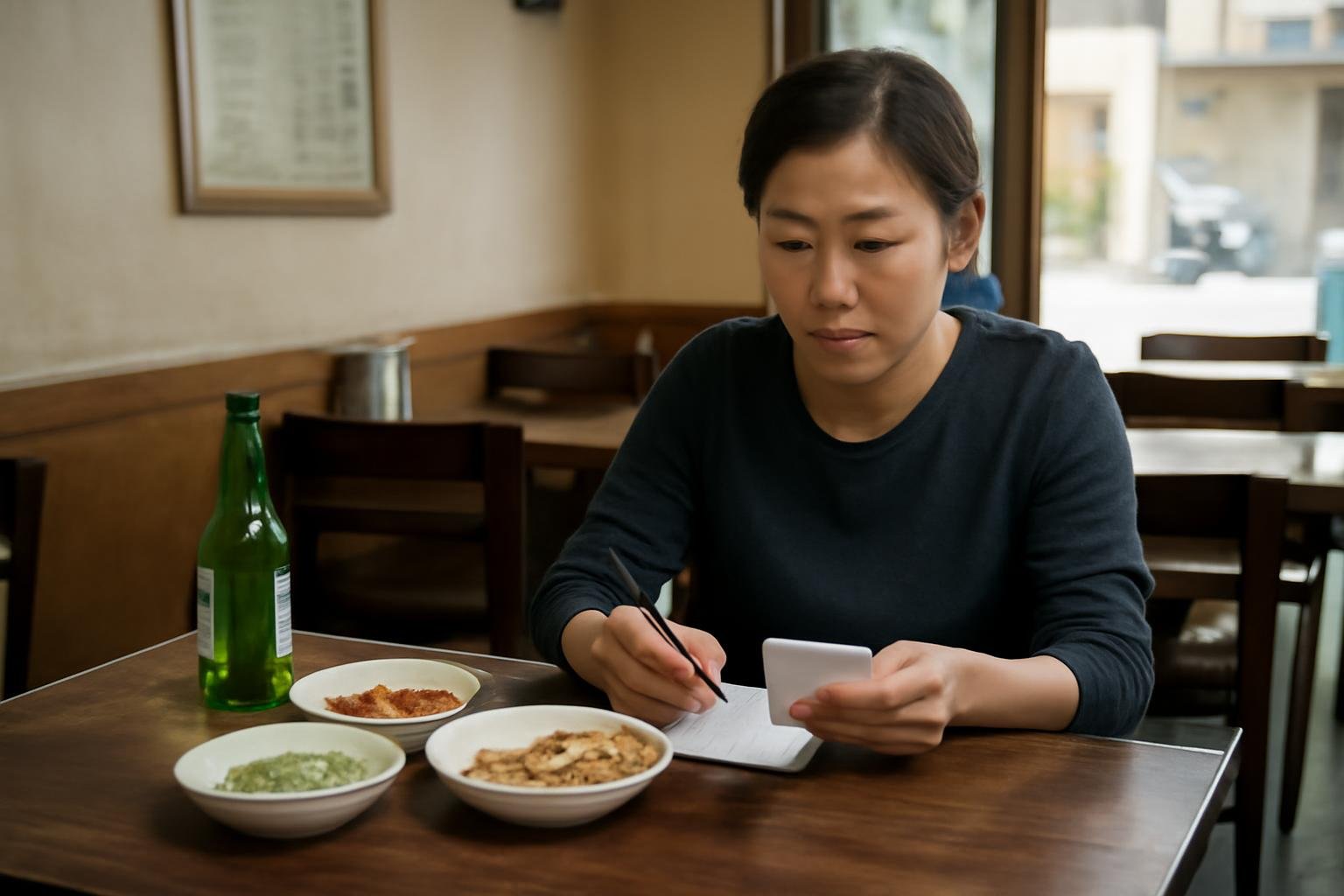
In South Korea, the amount shown on the menu is usually the amount you should expect to pay. At ordinary restaurants, cafés, bars, and taxis, tipping is not a standard part of the transaction, and staff generally do not expect an additional percentage after service. If a card terminal, delivery app, or payment screen asks for a tip, you can normally choose zero unless the business clearly states that a separate charge applies.
The important distinction is between a voluntary tip and a disclosed fee. Korea does have legitimate extra charges—such as a restaurant’s table setting fee, a barbecue restaurant’s side-dish or cooking charge, hotel service charges, or delivery-related fees—but these are not the same thing as American-style tipping.
Is tipping expected in Korea?
Usually, no. Leaving cash on a restaurant table, adding a percentage to a taxi fare, or selecting a tip amount at a café is not a normal requirement in South Korea. A sincere “감사합니다” (gamsahamnida, “thank you”) is enough in ordinary situations.
That does not mean a business can never accept gratuities. A hotel worker, tour guide, interpreter, driver, or restaurant employee may accept a small tip, particularly in an international or luxury setting. But acceptance is different from expectation. Offering money can sometimes create an awkward moment if the worker or establishment has a policy against it.
If you want to reward unusually helpful service, ask first or leave a brief note through the business’s official review channel. Do not assume that a tip is required simply because a payment device displays a tipping screen.
What extra charges are common?
Table or seating charges
Some restaurants charge a small amount for seating, table setting, or complimentary items placed on the table. This may appear as 상차림비 (sangcharim-bi, table-setting fee) or 테이블 차지 (teibeul chaji, table charge). It is most associated with certain barbecue restaurants, seafood restaurants, pubs, and establishments where the table comes with side dishes, utensils, sauces, or a prepared setting.
A similar charge may apply when a restaurant lets customers bring their own alcohol. Look for 콜키지 (kolkiji, corkage), which may be charged per bottle or according to the restaurant’s policy. This is a business fee, not a tip.
Minimum orders and per-person charges
Some restaurants impose a minimum order, especially for popular dishes, shared menus, private rooms, or busy dining periods. A menu may also state that certain dishes must be ordered by the table or that a set menu is required for each person.
At a Korean barbecue restaurant, for example, the meat price may be listed separately from rice, noodles, drinks, or cooking services. At some places, a staff member grills the meat for you; at others, you cook it yourself. If a cooking fee applies, it should be listed on the menu or explained by staff. When in doubt, ask before ordering: 이거 추가 요금 있어요? (igeo chuga yogeum isseoyo?, “Is there an additional charge for this?”).
Service charges in hotels and upscale venues
Hotels, international restaurants, banquet venues, and high-end establishments may add a service charge. It can be included in the displayed price or listed separately on the bill. A service charge is not automatically a tip distributed directly to individual staff members, so adding another gratuity is generally unnecessary unless you specifically want to do so.
When booking a hotel restaurant, private dining room, wedding meal, or catered event, check whether the quoted price includes service charge and VAT. Event quotations often separate the base price from taxes and service-related fees, while everyday restaurant menus are commonly presented more simply.
VAT and displayed prices
Many consumer prices in Korea are displayed as the final amount, but not every quotation works that way. Hotels, event spaces, wholesalers, delivery platforms, and business-to-business services may show a price before VAT or before additional fees. If the price matters—especially for a large booking—ask whether it is the 총액 (chongaek, total amount).
You can ask: 부가세 포함이에요? (bugase inclusions?, “Does that include VAT?”) or 총 얼마예요? (chong eolmayeyo?, “How much is the total?”).
What happens at cafés, restaurants, and bars?
At a café, you normally pay the listed drink or food price. A tip prompt on a tablet or card reader may be a voluntary feature supplied by the payment system rather than a Korean custom. Select “no tip” or enter zero without feeling that you have breached etiquette.
At ordinary restaurants, check whether side dishes, water, or service are included. Refills that are standard at one restaurant may cost extra at another, particularly for specialty ingredients or premium side dishes. The phrase 리필 돼요? (rիպil dwaeyo?, “Can I get a refill?”) is useful, although it is also fine to ask in English or point to the item.
Bars and pubs can have more varied billing practices. Some charge for snacks automatically, some require a minimum order, and some apply a table or seating fee. In nightlife districts, confirm the price of bottled spirits, shared snacks, and any room or seating charge before settling in. A charge printed on the menu is different from an unexpected demand for cash.
Do taxis, delivery apps, and card terminals expect tips?
Taxi fares are normally paid according to the meter or the app’s quoted fare. Rounding up is optional, not expected. If a driver helps with heavy luggage, a verbal thank-you is usually sufficient.
Food-delivery apps may display a tip option, particularly when an international payment system or platform design includes one. You can generally leave it at zero. Delivery fees, minimum-order surcharges, peak-time charges, and distance fees are separate from tips and may change according to the order.
Card terminals increasingly offer preset gratuity buttons because tipping software is easy to activate, not because tipping has become a universal Korean rule. Look carefully at the screen before confirming. If the total is higher than expected, ask the cashier to show the itemized amount: 내역 확인할 수 있을까요? (naeyeok hwaginhal su isseulkkayo?, “Could I check the breakdown?”).
How to tell a normal fee from an improper tip request
- Check the menu or booking terms. A legitimate table, corkage, minimum-order, or service fee should normally be disclosed before payment.
- Look for the wording. Terms such as 상차림비, 콜키지, 봉사료 (service charge), or 부가세 indicate a fee category; “tip” on a payment screen may be voluntary.
- Ask for an itemized bill. Say 영수증 부탁드려요 (yeongsujeung butakdeuryeoyo, “A receipt, please”) and compare it with the menu.
- Do not confuse a service fee with a gratuity. If service charge is already included, an additional percentage is usually unnecessary.
- Challenge surprises calmly. Ask, 메뉴에 안내되어 있었나요? (menyue annaedoeeosseonnayo?, “Was this stated on the menu?”).
If a business refuses to explain a charge or pressures you to pay an undisclosed amount, keep the receipt and record the restaurant name, date, and details. For a minor dispute, asking for a manager is often the quickest solution. For a substantial or clearly deceptive charge, contact your card issuer or seek advice from a local consumer-protection body.
Should you ever leave a tip?
Only if you genuinely want to and the situation makes sense. A private guide who gave exceptional assistance, a hotel worker who handled an unusual request, or a service worker in an explicitly international setting may appreciate a tip. Ask whether the establishment accepts it, and understand that the money may not go directly to the individual you intended to reward.
For everyday Korean dining, however, the safest rule is simple: pay the listed total, check for disclosed fees, and do not add a tip merely because a machine suggests one. Knowing the difference between 봉사료 (a formal service charge), 상차림비 (a table-setting fee), and a voluntary gratuity will prevent most payment surprises.