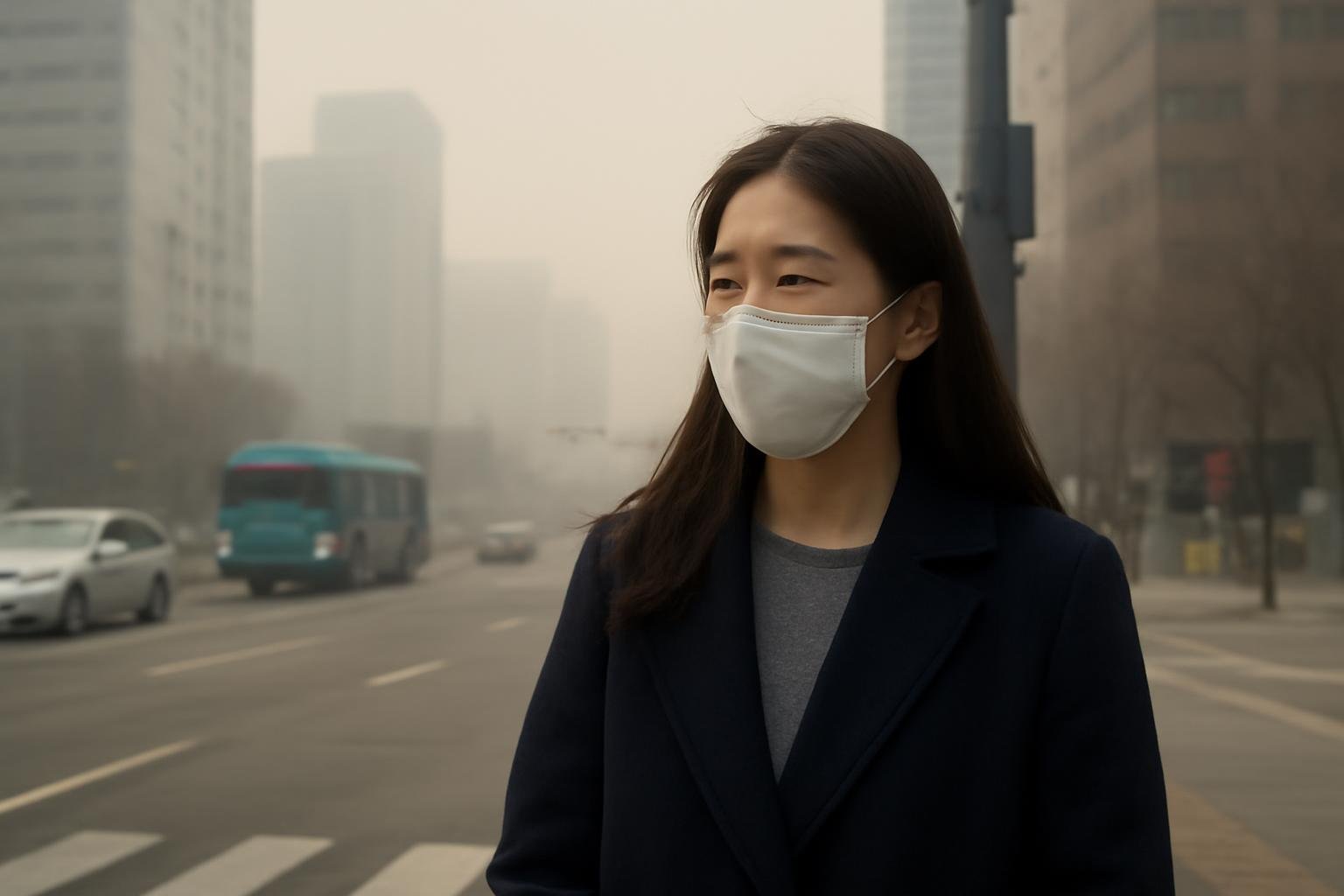
In South Korea, a fine dust alert can turn an ordinary outdoor day into a plan worth reconsidering. A hike, long bike ride, school sports session, or café terrace visit may be shortened, moved indoors, or postponed when air-quality levels rise.
The practical rule is simple: check both the forecast and the local alert before committing to strenuous or extended outdoor activity. The most important terms are 미세먼지 (mise-meonji, particulate pollution) and 초미세먼지 (chomie-meonji, ultrafine particles). In official air-quality information, these generally correspond to PM10 and PM2.5.
Why fine dust affects seasonal plans
Fine dust can occur throughout the year, but Korea’s highest-concern period is usually winter through spring. From December 1 to March 31, the government operates a seasonal fine-dust management period because weather patterns and atmospheric stagnation can make high concentrations more likely. Emergency episodes can also happen outside this period, especially when stagnant air, transported pollution, or yellow dust affects the peninsula. source
Rain and strong winds often improve conditions by dispersing or removing particles, while calm weather can allow pollution to build up. This is why a clear, sunny day is not automatically a clean-air day. The sky may look bright even when the air-quality forecast advises reducing prolonged outdoor activity.
PM10 and PM2.5: what the numbers mean
PM10 refers to particles with a diameter of 10 micrometers or less. PM2.5 is smaller—2.5 micrometers or less—and is often treated with particular caution because these particles can penetrate more deeply into the respiratory system.
AirKorea, the national air-quality information service, publishes forecasts several times a day. Its forecast bands use the following daily concentration ranges:
- Good: PM10 from 0–30 µg/m³; PM2.5 from 0–15 µg/m³
- Moderate: PM10 from 31–80 µg/m³; PM2.5 from 16–35 µg/m³
- Bad: PM10 from 81–150 µg/m³; PM2.5 from 36–75 µg/m³
- Very bad: PM10 above 150 µg/m³; PM2.5 above 75 µg/m³
These are forecast categories, not a personal medical diagnosis. Someone with asthma, chronic lung disease, cardiovascular disease, or strong sensitivity may feel symptoms at levels that another person barely notices. AirKorea’s guidance advises sensitive groups to limit long or strenuous outdoor activity on “bad” days, while people with symptoms such as coughing, throat discomfort, or sore eyes should consider avoiding outdoor activity as well. source
How an alert changes everyday plans
A fine-dust alert does not necessarily mean that everyone must stay indoors all day. In real life, people often adjust the duration and intensity of an activity rather than cancel everything automatically.
Walking and errands
A short walk to a subway station or convenience store may still be practical, particularly when the rating is moderate and you feel well. On a bad or very bad day, however, people may combine errands, use public transport for more of the journey, or choose an indoor shopping center instead of walking between several locations.
Hiking, cycling, and running
These are the plans most likely to change because they involve sustained breathing and physical exertion. A two-hour hike may become a shorter urban walk; an outdoor run may move to a gym; and a cycling trip may be postponed until the wind or forecast improves.
Do not rely only on how the air looks. Exercise increases breathing rate, so a person inhales more air during a hard workout than during a quiet walk. Even when an alert does not legally prohibit outdoor activity, it can be a sensible reason to reduce intensity—especially for children, older adults, pregnant people, and anyone with respiratory or heart conditions.
Schools and children’s activities
Schools and childcare facilities commonly monitor air quality when deciding whether to hold outdoor physical education, sports days, playground time, or field activities. The exact decision can depend on the forecast, the local education authority, the age and health of the children, and the activity’s intensity. Parents may receive a notice asking children to bring a mask, avoid outdoor play, or participate in an indoor alternative.
Festivals, markets, and sightseeing
Outdoor events usually continue unless organizers or local authorities announce a change, but attendance can be less comfortable during a bad-air episode. Visitors may want to shorten time at open-air markets, choose museums or department stores as backup destinations, and avoid scheduling a long viewpoint visit on a day when visibility and air quality are both poor.
What “fine dust alert” can mean
Everyday English often uses “fine dust alert” broadly, but Korean notices may distinguish between a forecast category and an official alert. You may see:
- 미세먼지 예보 (mise-meonji yebo): the fine-dust forecast or predicted air-quality level
- 미세먼지 주의보 (mise-meonji juuibo): a fine-dust advisory issued when concentrations reach an official threshold
- 미세먼지 경보 (mise-meonji gyeongbo): a higher-level warning
- 초미세먼지 주의보/경보: an advisory or warning specifically for PM2.5
The exact alert system and thresholds can vary by pollutant and administrative area. For daily planning, the forecast category is often more useful than waiting for a formal warning: “bad” conditions may already justify changing a long outdoor workout even if no siren-like public alert has been issued.
How to check conditions before leaving
- Check AirKorea or a reliable weather app for both PM10 and PM2.5.
- Look at the forecast for the specific city or province, not just the national average.
- Check again shortly before a long outdoor activity because conditions can change during the day.
- Pay attention to yellow-dust forecasts as well. 황사 (hwangsa) is a separate weather and pollution phenomenon that can worsen particle levels.
- Use symptoms as additional information: coughing, throat irritation, wheezing, and sore or watery eyes are reasons to reduce exposure, regardless of how attractive the weather looks.
AirKorea notes that its model results are forecasts rather than measurements, so the predicted level may differ from later observations. That is normal for air-quality forecasting and another reason to check both forecast information and current measurements. source
Masks, ventilation, and indoor alternatives
When outdoor exposure is unavoidable, a well-fitting particulate-filtering mask can reduce inhalation of airborne particles. Fit matters: a loose cloth mask or a mask worn below the nose offers limited protection. People with breathing difficulties should consider their medical needs and follow advice from a healthcare professional.
On poor-air days, “stay indoors” does not mean sealing a home permanently. Indoor air can also become stale, and cooking, smoking, candles, and dust can add pollutants. Many households ventilate briefly when outdoor conditions improve, use an air purifier if available, and avoid creating additional indoor particles. Public facilities such as subway stations, libraries, cinemas, museums, and shopping centers may provide more comfortable alternatives to a long outdoor outing, though indoor air quality varies by building.
A practical way to decide
For a healthy adult, a moderate rating may be manageable for ordinary errands, while a bad rating is a reason to avoid long or strenuous activity. A very bad rating calls for a much more conservative approach, particularly for sensitive groups. If your plan involves hours outdoors, heavy exercise, young children, or someone with a respiratory condition, make a backup plan before leaving.
In Korea, changing plans because of fine dust is not an overreaction or a sign that outdoor life has stopped. It is a routine form of weather planning: check the air, match the activity to the conditions, and keep an indoor option ready when the numbers—and your body—say it is time to stay in.