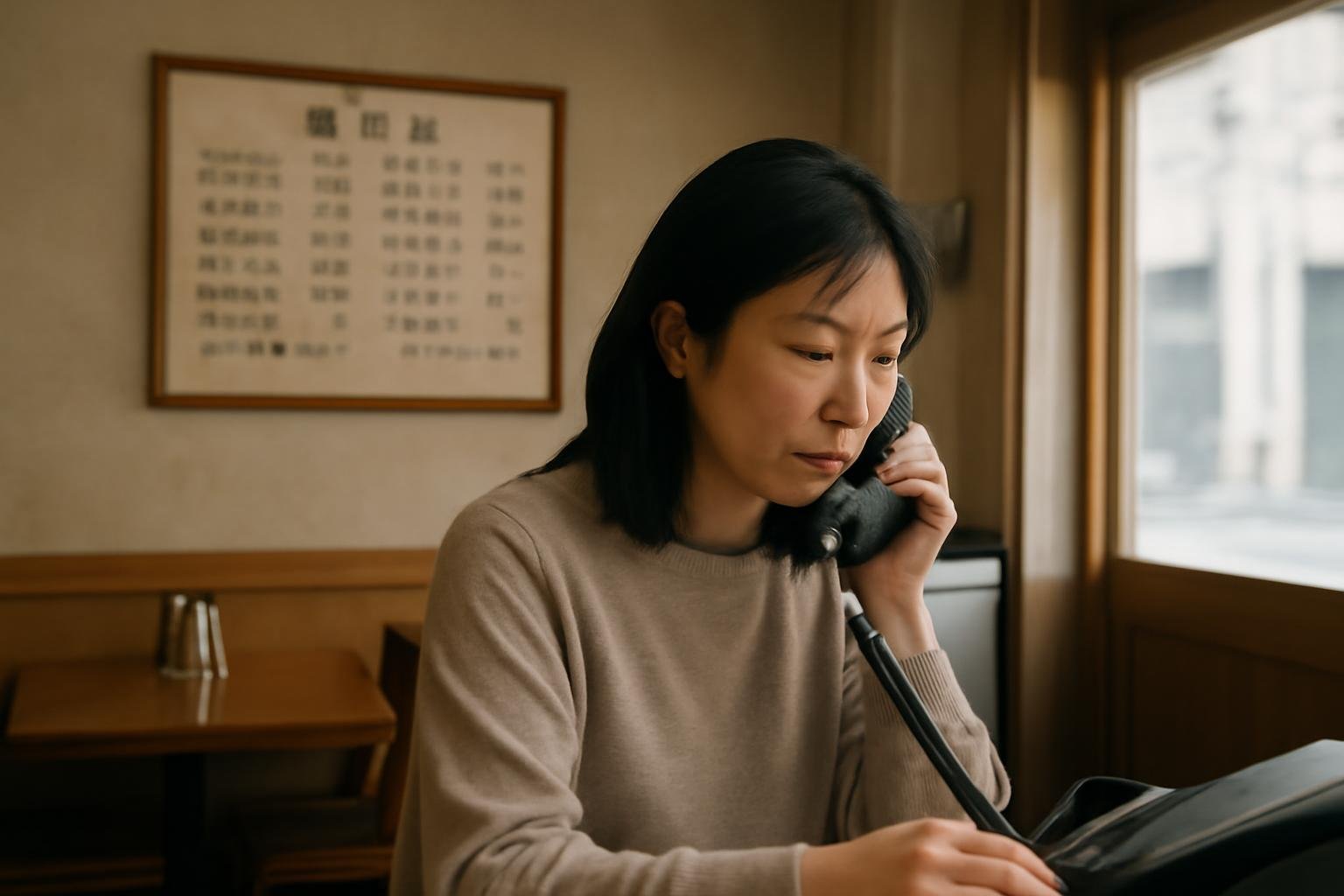
If a Korean restaurant accepts reservations only by phone, you still have several workable options—even if you do not have a Korean phone number or speak much Korean. The easiest route is usually to ask your hotel, accommodation host, workplace, Korean friend, or a local concierge to call on your behalf. If you call yourself, prepare the date, time, party size, name, and a Korean-language script before dialing.
Phone-only reservations are common at small restaurants, neighborhood eateries, barbecue restaurants, and places that manage bookings manually. The listing may show a telephone number but no reservation button, online form, or English support. In that situation, the challenge is not simply making the call: you also need to confirm whether the reservation was actually accepted, whether the restaurant requires a Korean mobile number, and what happens if you are late.
First, check whether a reservation is actually necessary
Before finding someone to call, check the restaurant’s latest information on its official social-media account, website, map listing, or booking page. Some restaurants take phone reservations only for large groups, while ordinary diners can join a same-day waiting list. Others accept reservations only during particular hours or release tables a few days in advance.
Look for Korean terms such as:
- 예약 (yeyak) — reservation
- 전화 예약 (jeonhwa yeyak) — reservation by phone
- 예약 문의 (yeyak munui) — reservation inquiries
- 웨이팅 (weiting) — waiting list or queue system
- 당일 예약 불가 (dang-il yeyak bulga) — same-day reservations unavailable
- 노쇼 (nosyo) — no-show
A map listing may also contain outdated hours or a phone number that reaches a branch rather than the location you want. If the restaurant has multiple branches, confirm the neighborhood and address before calling.
The most reliable option: have someone local call
For visitors, the simplest solution is to ask a Korean-speaking person to make the reservation. A hotel front desk, guesthouse host, serviced-apartment manager, tour operator, colleague, or friend can usually handle the call quickly. This is particularly useful when the restaurant asks for a Korean mobile number, takes deposits, or explains cancellation rules that are difficult to understand over the phone.
Give the caller all the information in one message:
- Restaurant name and branch
- Preferred date and one or two alternative times
- Number of diners
- Name for the reservation
- Your reachable phone number, if the restaurant requests one
- Any dietary restrictions or accessibility needs
- Whether you can pay a deposit or need to confirm the payment method
If you are staying at a hotel, ask the staff to confirm the reservation details in writing or note them on a card. Make sure you know the reservation name, time, address, and late-arrival policy before leaving.
How to call the restaurant yourself
You do not need to speak fluent Korean, but phone calls are less forgiving than text because you cannot point to a translation or reread the other person’s message. Write down your script and the Korean numbers for your date, time, and party size. Calling from a quiet place with a strong connection also helps.
You can begin with:
안녕하세요. 예약하고 싶은데요.
Annyeonghaseyo. Yeyak-hago sipeunde-yo.
“Hello. I would like to make a reservation.”
Then provide the essential details:
9월 20일 저녁 7시에 두 명 예약 가능할까요?
Gu-wol isip-il jeonyeok ilgop si-e du myeong yeyak ganeunghalkkayo?
“Would a reservation for two people at 7 p.m. on September 20 be possible?”
Replace the date, time, and number of people as needed. If you are unsure about pronunciation, you can say the restaurant name and use simple English for the rest. Some staff may understand basic English, especially in busy tourist areas, but do not assume that English support is available.
Useful follow-up phrases include:
- 예약자 이름은 [name]입니다. (Yeyakja ireumeun [name]-imnida.) — “The reservation name is [name].”
- 외국인인데 한국 전화번호가 없습니다. (Oegugin-inde Hanguk jeonhwabeonhoga eopseumnida.) — “I am a foreigner and do not have a Korean phone number.”
- 여권 이름으로 예약해도 될까요? (Yeogwon ireumeuro yeyakhaedo doelkkayo?) — “May I make the reservation using my passport name?”
- 예약 확인 문자를 받을 수 있을까요? (Yeyak hwagin munjareul badeul su isseulkkayo?) — “Could I receive a confirmation text?”
- 늦으면 몇 분까지 괜찮을까요? (Neujeumyeon myeot bun-kkaji gwaenchanheulkkayo?) — “How many minutes late is acceptable?”
If the staff speaks too quickly, say:
죄송하지만 천천히 말씀해 주세요.
Joesonghajiman cheoncheonhi malsseumhae juseyo.
“Sorry, but please speak slowly.”
You can also ask whether the reservation has been recorded:
예약된 거 맞을까요?
Yeyakdoen geo majeulkkayo?
“Could you confirm that the reservation is recorded?”
What to do if the restaurant requires a Korean phone number
A restaurant may request a Korean mobile number to send a confirmation message or contact you if the table becomes available. This does not always mean a Korean citizen’s number is required. Ask whether an international number, hotel number, or reservation name will work instead.
You can say:
해외 전화번호도 괜찮을까요?
Haeoe jeonhwabeondo gwaenchanheulkkayo?
“Is an overseas phone number acceptable?”
If the restaurant needs to contact you locally, provide your hotel or accommodation number only if the staff agrees and the accommodation can receive calls. Do not use a random Korean number. That can create problems for another person and may make it impossible for the restaurant to reach you.
If a reservation platform asks for Korean identity verification or a Korean mobile-phone authentication code, a foreign visitor may not be able to complete the process independently. In that case, try the restaurant’s direct phone number, ask a local person to book, or use an in-person visit as a fallback.
Confirm the reservation before you hang up
Repeat the details slowly at the end of the call. Confirm the date, time, number of diners, reservation name, branch, and any deposit or cancellation requirement.
9월 20일 저녁 7시, 두 명, [name]으로 예약된 거죠?
Gu-wol isip-il jeonyeok ilgop si, du myeong, [name]-euro yeyakdoen geo-jyo?
“It is booked for two people at 7 p.m. on September 20 under [name], correct?”
Ask whether you need to arrive early, whether the table is held for only a limited time, and whether the restaurant charges a cancellation fee or deposit. Korean restaurants vary widely: some hold a table briefly for late arrivals, while others cancel a booking if the party does not appear promptly.
Write down the answer immediately. If the restaurant sends a text message, save a screenshot showing the date, time, location, and reservation name. A text confirmation may be in Korean, but the numbers and address are still useful if you need to show the message at the entrance.
When a phone call does not work
If nobody answers, do not conclude immediately that the restaurant is closed. Staff may be busy during lunch or dinner service, and small restaurants sometimes do not answer the phone while serving customers. Try calling during a quieter period listed in the restaurant’s operating schedule. Avoid repeatedly calling during the busiest meal rush.
Other practical alternatives include:
- Ask your accommodation to call: This is often the fastest solution for a time-sensitive booking.
- Visit in person: Go before the busiest service period and ask about a reservation for later that day or another date.
- Join the queue: Some restaurants use a digital waiting list at the entrance rather than accepting advance bookings.
- Ask about cancellations: A fully booked restaurant may have an opening later, but you need to know whether it can contact you without a Korean number.
- Choose a nearby alternative: If the restaurant’s booking process depends on Korean identity verification, another restaurant with online or walk-in seating may be more practical.
Do not rely on an unverified social-media direct message as proof of a reservation. If the restaurant has not clearly confirmed the date, time, and party size, treat the booking as unconfirmed.
On the day of the reservation
Bring the reservation name exactly as it was given to the restaurant. If you used a foreign name that may be difficult to hear, show the confirmation message or write the name in Roman letters and, if possible, Hangul. Arrive a little early, especially if the restaurant is inside a market, shopping complex, alley, or large building.
If you are delayed, call as soon as possible and say:
죄송합니다. 10분 정도 늦을 것 같습니다.
Joesonghamnida. Sip bun jeongdo neujeul geot gatseumnida.
“I am sorry. I think I will be about 10 minutes late.”
Then ask:
예약을 유지해 주실 수 있을까요?
Yeyageul yujih ae jusil su isseulkkayo?
“Could you keep the reservation?”
The key is to secure a clear confirmation rather than assuming that a phone number, voicemail, or unanswered call equals a booking. Prepare the details, use a local caller when the restaurant requires one, and keep a written record of the agreement. That approach works for most phone-only restaurants without requiring a Korean number of your own.