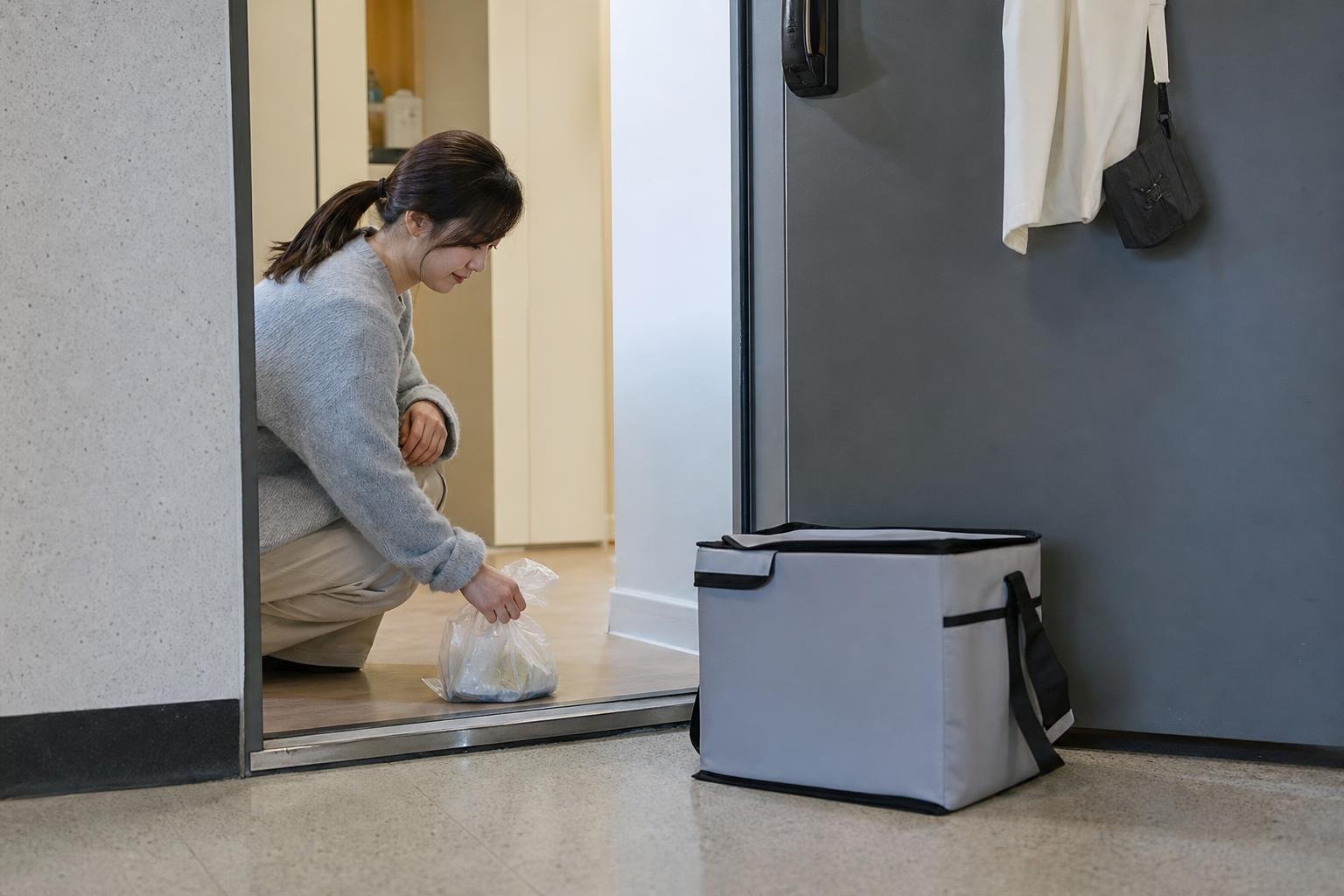
Food delivery in Korea is easy once the address, access instructions, phone verification and payment method are set up correctly. The difficult part for foreigners is usually not finding a restaurant. It is giving the courier a location they can actually reach, using an app that accepts your phone number and card, and staying available when the order arrives.
For a first order, use a hotel, serviced apartment or other staffed accommodation if possible. A lobby is easier than a locked apartment entrance, and reception can help if the courier calls. If you are outdoors, choose an official meeting point rather than dropping a map pin somewhere vague.
Choose an app that matches your situation
Korea’s major delivery apps offer the widest restaurant selection, but their registration, language and payment requirements can vary. Some features may require Korean phone verification, a locally supported payment method or information linked to a Korean account. App screens and eligibility can also change, so check the current checkout options before building your order around one service.
For short-term visitors, a foreigner-oriented platform can be simpler. SHUTTLE Delivery is listed by the Korea Tourism Organization as a service for international visitors and residents. It supports ordering and payment through its website and app, including international-user features, but service coverage still depends on the delivery area and the restaurants available there. Check your exact address in the app before choosing what to eat.
- Travelers: start with a foreigner-friendly service if you do not have a Korean number or local payment method.
- Residents: compare the major Korean apps once you have a Korean number, local address and a payment method that the app accepts.
- Everyone: confirm the final total, minimum order and delivery fee before paying. The menu price is not always the complete cost.
Enter a Korean address in the right order
Korean delivery systems generally work best with a road-name address, known as 도로명주소. Enter the street address shown by your hotel, host, school or landlord, then add the building name, tower or building number, floor and unit where relevant.
A useful format is:
[Building number and road name], [district], [city]
[Building or apartment name], Building [number], Floor [number], Unit [number]
Do not assume that a map pin at the center of an apartment complex is enough. Large complexes may have several vehicle entrances, towers, underground parking areas and security gates. If the app separates the address from delivery notes, put the official address in the address fields and use the notes for access details.
Before ordering, copy the address exactly from one of these sources:
- your accommodation confirmation or hotel website;
- the address supplied by your host, school or employer;
- the building’s Korean sign or lobby information;
- a Korean map service showing the property’s road-name address.
If you are staying in a one-room, guesthouse or older multi-unit building, check whether a room number, floor or entrance label is missing from the official address. Korea’s government address system recognizes detailed information such as building, floor and unit numbers as important for reliable delivery and mail. When the app cannot identify your unit, write the missing detail clearly in the delivery note.
Plan for apartment gates and locked entrances
Many apartment complexes have controlled entrances. A rider may reach the correct property but still be unable to enter the building, use the elevator or find the right tower. Some couriers will call, some will wait briefly at the entrance, and some orders may be left at a designated lobby or security desk. Do not assume the rider can follow another resident through the gate.
Use one of these practical arrangements:
- Meet at the main entrance. This is the safest option when you cannot provide an entry code.
- Ask the hotel or host to receive the order. Confirm that outside food may be accepted and where it should be left.
- Provide an approved access instruction. Only share a building code if you are permitted to do so and the app’s privacy and safety practices are clear.
- Watch the order status and go downstairs. This avoids a missed call while the rider is waiting outside.
Useful Korean notes include:
문 앞에 놓아 주세요.
Mun ape noa juseyo.
Please leave it at the door.
도착하시면 연락 주세요.
Dochakasimyeon yeollak juseyo.
Please contact me when you arrive.
1층 로비에서 받을게요.
Ilcheung robi-eseo badeulgeyo.
I will receive it in the first-floor lobby.
For an apartment, “doorstep delivery” usually means the door of your unit, not necessarily the outer gate or building entrance. For a hotel, dormitory or office, the practical endpoint may be the lobby. Check the property’s rules before ordering food that requires refrigeration or immediate collection.
Phone verification and courier contact
A working phone is more important than fluent Korean. Couriers may call when they reach a gate, cannot identify the building or need clarification about the meeting point. Keep your phone audible and answer unfamiliar Korean numbers during the expected delivery window.
The main barriers are usually:
- the app accepts only certain country codes;
- verification SMS does not arrive on a roaming number;
- the number is accepted for registration but not for courier calls;
- the app uses an in-app chat or masked call system that behaves differently from a normal phone call.
If verification fails, do not repeatedly submit random numbers. Try the app’s guest or non-member ordering option if available, switch to a service designed for international users, or ask your accommodation to place the order. A Korean eSIM or local SIM may solve some communication problems, but it does not automatically guarantee that every delivery app will accept the number or your foreign card.
Payment, minimum orders and delivery notes
At checkout, look for the payment methods actually offered for your account and location. Depending on the service, these may include an international card, PayPal, a local card, a Korean wallet or another regional payment option. A card that works in shops or taxis may still be rejected by a particular delivery platform because online authorization, billing address checks or additional verification are different.
Before confirming, check:
- the final total after delivery charges and discounts;
- the minimum order amount;
- whether the restaurant has added options or substitutions;
- the estimated delivery window;
- the selected delivery method, such as doorstep or meeting-point collection;
- whether disposable cutlery is requested.
Keep delivery notes short and specific. Include the entrance, tower, floor, unit, lobby or meeting point—but not a long explanation that a rider must translate while working. If you need to avoid spicy food, peanuts or another ingredient, use the restaurant’s available options and contact support for serious allergy concerns. Do not assume a general note will be understood as a medical guarantee.
Ordering to parks, riversides and public places
Outdoor delivery is possible in some Korean parks, but a rider cannot reliably find an unspecified picnic blanket. Seoul’s Hangang Parks use designated delivery zones, and the city has identified delivery points in areas including Yeouido, Ttukseom and Mangwon. Choose the exact zone shown by the app, then remain there with your phone available.
For an outdoor order:
- select the official delivery-zone address, not simply the park name;
- write the zone or landmark in the note;
- order before moving to another part of the park;
- watch the status and approach the pickup point when the rider is close;
- take your rubbish with you and follow the park’s disposal rules.
The same principle applies to campuses, hospitals, subway-area meeting points and large office buildings. “Main entrance” may refer to several entrances, so identify a named gate, building or information desk.
What to do when the normal app fails
If your card is rejected, try another supported payment method rather than assuming the restaurant is unavailable. If the address cannot be found, ask the accommodation for its Korean road-name address and building details. If the app requires a Korean number, use a foreigner-friendly service or ask reception to order on your behalf.
Other workable alternatives include restaurant websites, direct phone orders with help from a Korean-speaking host, takeaway pickup, convenience-store meals, supermarket delivery or eating at the restaurant. Pickup is often the better choice when the building is difficult to access, the order is small, or you will be leaving soon.
The fastest successful order in Korea is rarely the one placed with the most confidence. It is the one with a precise address, a reachable phone, a clear endpoint and a payment method confirmed before checkout.