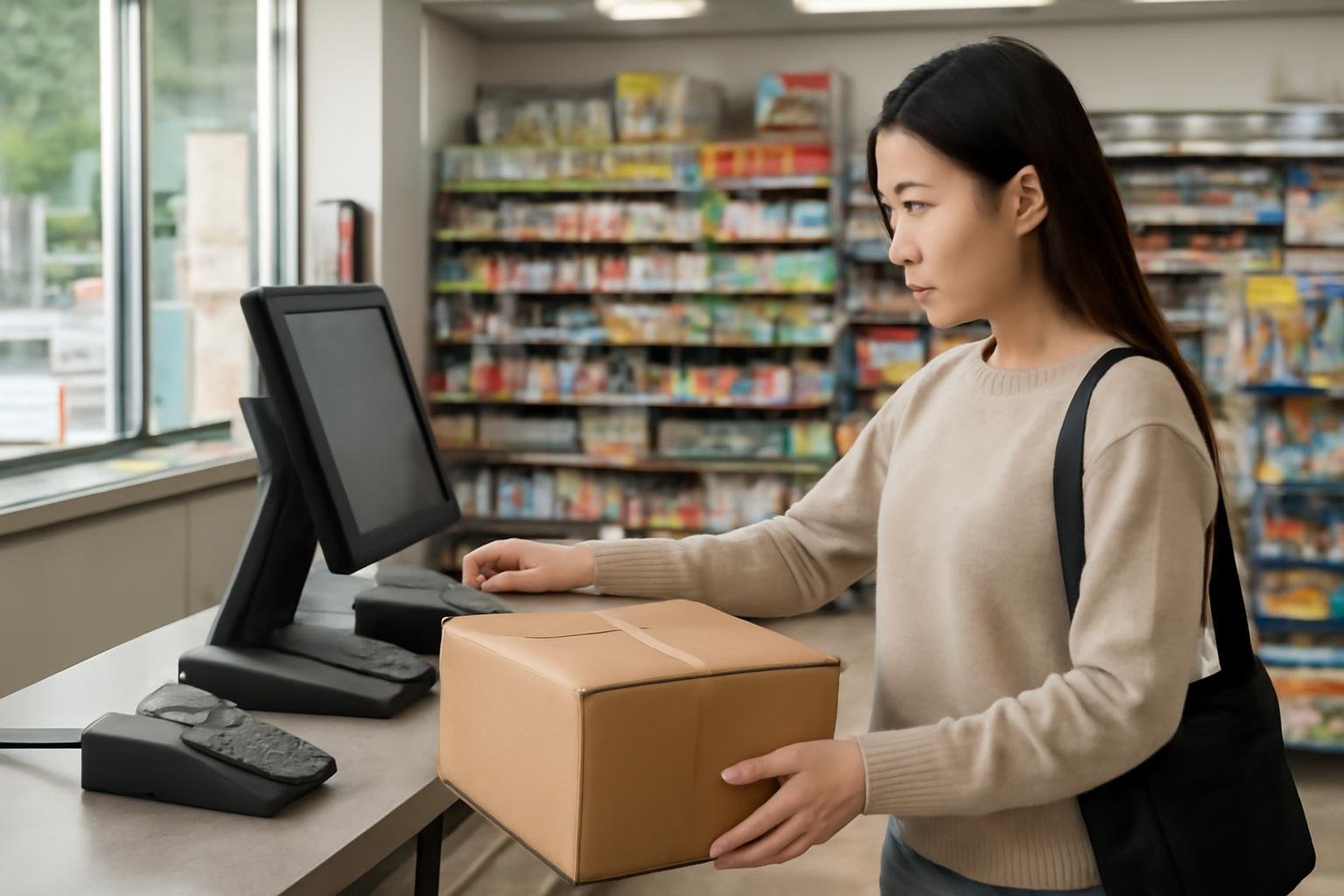
Sending a package from a Korean convenience store is usually straightforward: pack the item, use the store’s parcel kiosk or make an online reservation, print the shipping label, pay, and hand the parcel to the cashier. The main chains offering this service are CU and GS25.
In Korean, convenience-store parcel delivery is called 편의점 택배 (pyeonuijeom taekbae, convenience-store courier service). You can normally send a parcel to someone’s home or workplace, and some services let the recipient collect it from another convenience store for a lower fee.
Choose the right type of delivery
Before you begin, decide where the recipient should receive the parcel.
- Home or workplace delivery: The courier delivers to a normal street address. This is the best choice for larger items, urgent shipments, or recipients who cannot visit a store.
- Store-to-store delivery: The recipient collects the parcel from a selected CU or GS25. At GS25, this is commonly called 반값택배 (bangap taekbae, “half-price delivery”). CU has a similar store-pickup option.
Store-to-store delivery is often useful for secondhand-market sales or informal exchanges, but the recipient must have access to the phone number used for the shipment. The arrival notice and pickup QR code are generally sent by text or through the service’s system.
What you need before visiting the store
- A securely packed parcel
- The sender’s name, phone number, and address
- The recipient’s name, phone number, and address—or the destination convenience store
- A payment method accepted by the store or kiosk
- Enough time to weigh the parcel and complete the label
A Korean mobile phone number is practically important. The delivery company uses the number for notifications, delivery problems, and store-pickup verification. A foreign resident with a Korean number can usually use the service, but a visitor with only an overseas number may have difficulty completing online reservations or receiving pickup messages. If the kiosk rejects your number, ask a Korean-speaking friend to help or use a staffed courier counter or post office instead.
Step 1: Pack the parcel properly
Use a sturdy cardboard box or padded envelope. Remove or cover old barcodes and addresses, and fill empty space so the contents do not move. Convenience stores sometimes sell boxes and packing materials, but stock varies by branch, so do not assume that the exact size you need will be available.
Do not send prohibited or restricted items. Common problems include leaking liquids, flammable materials, fragile objects packed without protection, cash, and other items restricted by the individual courier. If you are unsure, ask the clerk before sealing the parcel.
Step 2: Use the kiosk or make an online reservation
Many CU and GS25 branches have a parcel kiosk, often called a Postbox. The exact screen layout varies, but the process is similar:
- Choose parcel delivery.
- Select domestic delivery or store-to-store delivery.
- Enter the sender and recipient information.
- Place the parcel on the scale when prompted.
- Review the delivery fee and payment method.
- Print the shipping label.
GS Postbox officially describes the sequence as reception, weighing, service selection, sender and recipient information, fare confirmation, and waybill printing. GS25 also allows members and non-members to use its parcel system, although online reservations can be more convenient if you are sending several packages. CU provides similar domestic, store-pickup, and international parcel options through CU Post.
If the kiosk is unavailable, look for the parcel-service sign near the entrance or ask:
택배 보내고 싶은데요.
Taekbae bonaego sipeundeyo.
“I’d like to send a package.”
The staff can tell you whether that branch accepts parcels and where to start. Not every branch has identical equipment or handles every service, so checking the chain’s store locator before walking over can save time.
Step 3: Print and attach the label
The kiosk prints a 운송장 (unsongjang, shipping waybill). Separate the adhesive label from the receipt portion if necessary, and attach the label flat to the largest surface of the box. Do not place tape over the barcode if it makes the code difficult to scan.
Check the recipient’s phone number and address carefully before handing over the parcel. Korean addresses can contain similar building names, apartment complexes, and district names. For a workplace delivery, include the company or department name when relevant.
Step 4: Pay and leave the parcel with the store
Take the labeled parcel to the cashier. Depending on the service and branch, you may pay at the kiosk or at the counter. Keep the receipt until the package is delivered. It contains the tracking number, usually labeled 운송장번호 (unsongjang beonho).
Ask the clerk:
이거 직원분께 드리면 되나요?
Igeo jigwonbunkke deurimyeon doenayo?
“Should I give this to the staff?”
The parcel is normally collected from the store by the contracted courier rather than delivered directly from one convenience store to another. Tracking may not update immediately, especially if you drop it off after the day’s collection time, on a weekend, or around a holiday.
How store-to-store delivery works
For a store-pickup shipment, select the recipient’s destination branch rather than entering a home address. The recipient receives a notification when the parcel arrives and shows the pickup QR code or verification information at the destination store.
Enter the recipient’s phone number accurately. If the number is wrong, the recipient may not receive the arrival message or may have difficulty proving that the parcel is theirs. Some services also have a holding period, after which an uncollected parcel can be returned or handled according to the courier’s policy. Check the current terms when booking rather than assuming every chain uses the same deadline.
Do not use a convenience store as the recipient’s return address unless the service specifically permits it. GS Postbox warns that parcels cannot be returned to a GS25 store as an ordinary return address; use a home or workplace address instead.
Common problems and practical fixes
The kiosk is only in Korean
Look for familiar words such as 국내택배 (domestic parcel), 반값택배 (store-to-store delivery), 받는 분 (recipient), and 보내는 분 (sender). If you are unsure, take a photograph of the screen and ask the cashier before confirming payment.
The store does not accept parcels
Some branches lack a working kiosk, have reached their temporary intake limit, or do not offer every delivery product. Try another nearby branch, preferably one listed in the carrier’s store locator.
Your foreign card does not work
Payment options depend on the chain, kiosk, and service. Carry a Korean payment option or cash as a backup, and ask whether payment can be completed at the counter. Do not rely on a foreign card without testing it if the shipment is time-sensitive.
The parcel is too large, heavy, or fragile
Convenience-store courier services have size, weight, and packaging limits that vary by product. If the kiosk refuses the parcel, use a regular courier pickup, Korea Post, or a specialist shipping company. A post office is usually the better fallback for international mail, customs paperwork, or items that need special handling.
Sending a package overseas
International shipping is a separate process from ordinary domestic delivery. CU and GS25 offer international options through their parcel platforms, and some convenience-store services work with private carriers such as DHL. You will need the recipient’s full overseas address, phone number, contents description, and customs value. Customs authorities may charge taxes or request additional documents, and declaring an artificially low value can create problems.
For an international shipment, check the available carrier and destination before packing. If you need the broadest choice of postal services, customs assistance, or a clearly documented receipt, Korea Post is often the simpler in-person alternative.
Useful Korean at the counter
- 택배 접수 돼요? (Taekbae jeopsu dwaeyo?) — “Can I send a package here?”
- 국내로 보낼 거예요. (Gungnaero bonael geoyeyo.) — “I’m sending it domestically.”
- 반값택배로 보내고 싶어요. (Bangap taekbaero bonaego sipeoyo.) — “I’d like to use store-to-store delivery.”
- 운송장 번호가 어디 있어요? (Unsongjang beonhoga eodi isseoyo?) — “Where is the tracking number?”
For most ordinary domestic parcels, the fastest method is to use a CU or GS25 kiosk, enter the information carefully, attach the printed waybill, and keep the receipt. If the kiosk, phone verification, payment, or parcel size causes trouble, switch to another branch or use Korea Post rather than trying repeatedly with an incompatible service.