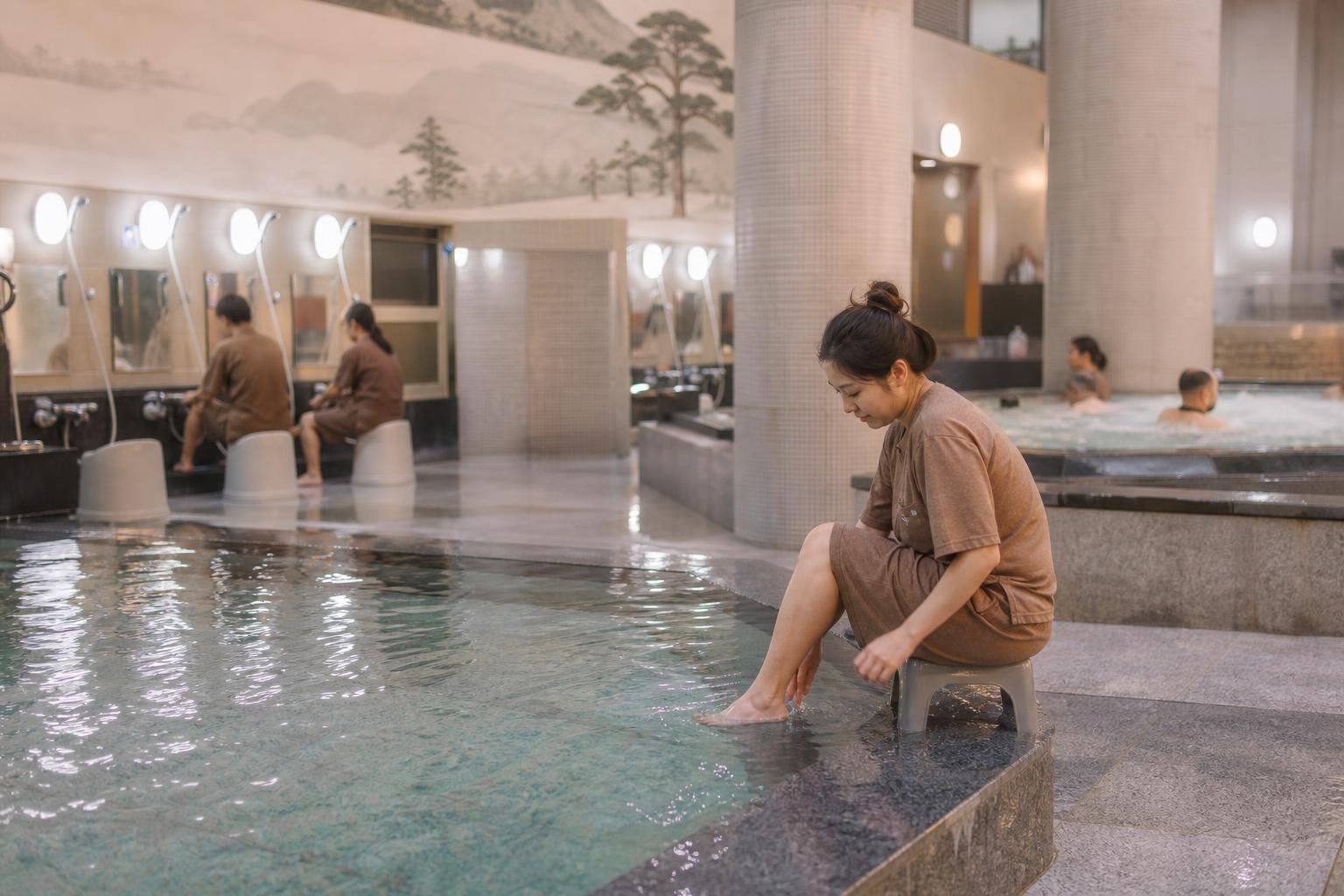
A Korean bathhouse normally has a sex-separated bathing section where guests are nude. A larger jjimjilbang also has shared lounges and heated rooms where everyone wears the supplied shirt and shorts. The essentials are simple: remove your shoes, store your belongings, wash thoroughly before entering a pool, keep towels out of the water, and never take photos in the changing or bathing areas.
Details such as admission time limits, toiletries, tattoo rules, overnight access, and payment systems vary substantially. Treat the venue’s posted instructions as the final word.
Public bathhouse or jjimjilbang?
A neighborhood 목욕탕 (mogyoktang, often written mokyoktang) focuses on bathing. It typically has seated washing stations, hot and cold pools, and one or more steam or dry-sauna rooms inside the sex-separated area.
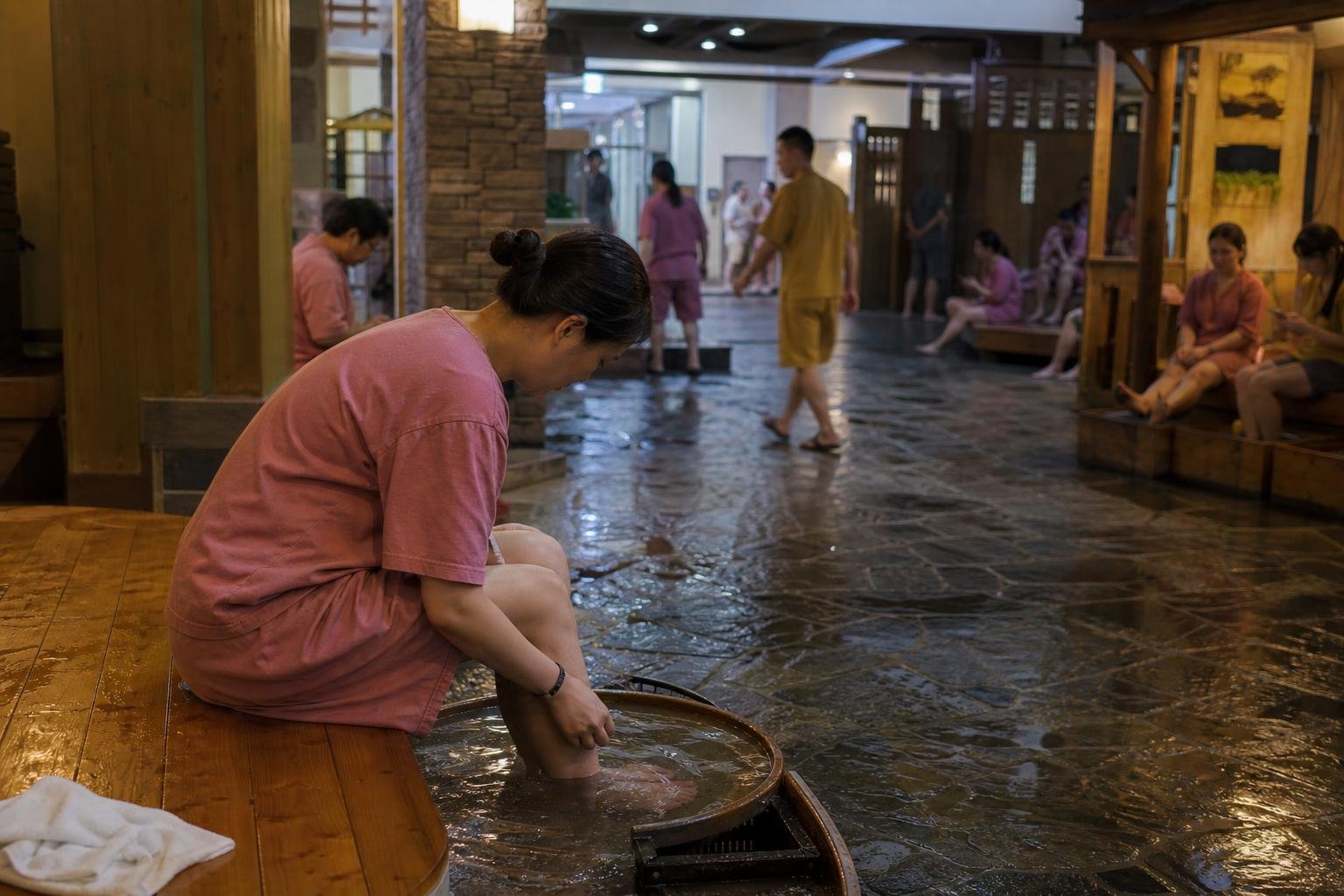
A 찜질방 (jjimjilbang) combines those bathing facilities with a clothed relaxation area. Depending on the property, that area may include heated rooms, a cooling room, floor lounges, restaurants, massage chairs, games, or children’s facilities. Korean tourism materials describe modern jjimjilbangs as combined bathing, resting, dining, and leisure spaces, but smaller venues may offer little beyond a bath and a few heated rooms. source
The English word “sauna” is used loosely on Korean signs and may describe the whole establishment, not just a Finnish-style wooden room. Check current photographs and amenity lists if a particular facility matters to you.
The usual arrival routine
- Remove your shoes. Place them in a shoe locker near the entrance. Depending on the system, you may keep that key or hand it to reception.
- Choose your admission type. Ask whether the price covers only the bath or also the jjimjilbang. Some venues have separate day and night rates or enforce a fixed visit length.
- Collect your locker key and uniform. Jjimjilbang admission generally includes a T-shirt and shorts. Towels may be issued at the desk or stocked in the changing room.
- Use the designated changing room. Put your clothes, shoes, wallet, and other valuables in the assigned lockers.
The key is commonly attached to a wristband or ankle band. At some larger facilities, it also records purchases at snack counters, massage chairs, and other amenities, with the balance paid when you leave. Other venues require immediate payment, so ask before walking away from a counter. source
Guest: 찜질방도 이용할게요. Jjimjilbang-do iyonghalgeyo. “I’d like to use the jjimjilbang too.”
Staff: 네, 신발장 열쇠 주세요. Ne, sinbaljang yeolsoe juseyo. “Okay, please give me the shoe-locker key.”
If the procedure is unclear, ask 어떻게 이용하면 돼요? (Eotteoke iyonghamyeon dwaeyo?), meaning “How should I use the facilities?”
Expect nudity in the bathing section
Conventional public baths do not normally permit swimsuits in the sex-separated bathing area. Undress in the changing room and take only your toiletries, locker key, and small towel into the bath. The jjimjilbang uniform belongs in the shared area, not in the pools.
You may hold the small towel in front of yourself while walking, but do not wrap it around your body or dip it in a communal pool. Most guests are concentrating on washing or relaxing rather than studying the people around them.
If communal nudity does not work for your religious requirements, privacy needs, or personal comfort, do not assume the facility has curtains or private stalls. Look specifically for a bookable private bath or hotel spa and confirm the layout before visiting.
Wash before entering any pool
At an open washing station, sit on the low stool and wash your hair and body thoroughly before soaking. Korea’s official introductory material for newcomers likewise notes that guests undress and bathe without swimwear, while accounts of bathhouse practice consistently place showering before the communal pools. source
- Rinse away all soap and shampoo before entering a pool.
- Tie up long hair so that it does not trail in the water.
- Keep your towel out of the pool.
- Do not shave, wash clothing, or exfoliate while sitting in a communal bath.
- Control the shower spray so it does not hit the person beside you.
- Rinse your stool and washing area when you finish.
Soap and shampoo are not universally included, especially at basic neighborhood baths. Bring travel-size toiletries if you do not want to buy single-use products. Conversation is fine, but avoid shouting, rough play, and heavy splashing.
Keep your phone stored in private areas
Do not photograph or record anything in a changing room, bathing room, or sweating room, even when the space appears empty. South Korea’s Personal Information Protection Act prohibits using mobile imaging devices to film people or related objects from places overlooking public baths, changing rooms, toilets, and sweating rooms, except in narrowly defined emergencies. Separate criminal penalties can apply to nonconsensual filming of a person’s body in circumstances capable of causing sexual humiliation. source
The clearest etiquette is to leave the phone in your locker throughout the nude portion of the visit. Phone use may be permitted in a clothed lounge, but check posted rules and keep strangers—particularly sleeping guests and children—out of your pictures.
Using the shared heated rooms
Dry off fully and put on the supplied uniform before entering the shared area. Korean hygiene rules specifically require bathhouse operators to have guests wear sweating clothes in mixed-sex heated rooms. source
Facilities differ, but you may find rooms decorated with salt, clay, charcoal, stone, or wood, along with a cooling room and open floor lounge. Start with a moderate room rather than the hottest one. Korea Tourism Organization guidance recommends allowing for individual heat tolerance, moving gradually from cooler rooms, and limiting exposure in rooms above 60°C. source
Drink water, take breaks, and leave immediately if you feel dizzy, weak, nauseated, confused, or unwell. Heat illness can involve dizziness, nausea, weakness, headache, and altered mental status. Pregnancy, some health conditions, medications, and alcohol can also affect heat tolerance, so consult a medical professional if you are unsure whether intense heat is appropriate for you. source
Korean regulations require facilities to post cautions for several higher-risk groups, including pregnant guests, frail older guests, young or unwell children, people with severe heart conditions, and anyone who has consumed alcohol within the previous two hours. Operators must also refuse entry when intoxication makes normal use of the bathhouse difficult. source
Resting, eating, and sleeping
In the lounge, keep your voice down and take only the floor space you need. Guests may rest on mats or directly on heated flooring, sometimes using a firm wooden or plastic headrest.
Larger jjimjilbangs commonly sell 식혜 (sikhye, a sweet rice drink) and roasted eggs, along with noodles, dumplings, soups, snacks, and ice cream. Eat only in designated areas, and check before bringing in outside food or drinks. source
Some 24-hour facilities allow temporary sleep, but they are not private hotels. Korean hygiene rules prohibit operators from providing bedding intended for accommodation, although large towels and pillows may be supplied for short rest or sleep. Expect shared floors, conversation, lights, alarms, cleaning activity, and limited luggage space. source
Trying a Korean body scrub
세신 (sesin, commonly written seshin in English) is a vigorous exfoliating service performed on a waterproof table in the bathing section. It costs extra and may require a reservation by locker number. Services and payment methods vary, and attendants will often ask you to soak first. source
The treatment involves nudity, close physical contact, repeated rinsing, and much firmer pressure than a gentle spa exfoliation. Speak up immediately if it hurts:
Guest: 조금 약하게 해 주세요. Jogeum yakhage hae juseyo. “Please do it a little more gently.”
Attendant: 이렇게요? Ireokeyo? “Like this?”
Guest: 네, 좋아요. Ne, joayo. “Yes, that’s good.”
Do not book a scrub over broken, irritated, sunburned, or healing skin. If you have a new tattoo or recent skin treatment, follow the aftercare instructions you were given rather than soaking or exfoliating it.
Children, tattoos, and venue-specific admission
As of September 2026, national hygiene rules state that guests aged four—defined explicitly as 48 months—or older must not be admitted to a bath or changing room together with members of the other sex. The rule uses the child’s actual age in months, not former Korean age-counting customs. A business may impose a stricter age cutoff or require a same-sex guardian, so families traveling with an opposite-sex child should ask before arriving. source
For 24-hour jjimjilbangs, provincial or metropolitan authorities set a youth-entry restriction within the period from 10 p.m. to 5 a.m. The national rule provides exceptions involving a parent or guardian, qualifying supervision, or a properly completed guardian consent form. The exact restricted hours and identification procedure can therefore vary by location and venue. source
Tattoo admission also varies. Do not assume that every Korean bathhouse follows either a blanket ban or a blanket welcome policy. A facility may admit tattoos, require coverage where practical, or refuse entry under its house rules. Because a tattoo cannot remain covered in a nude communal bath, contact the venue directly if yours is large or prominent.
Traditional facilities generally divide changing and bathing areas into male and female sections and may not have an all-gender or private alternative. Trans and nonbinary guests should ask the specific venue how it handles admission and whether private facilities are available rather than relying on a general rule.
What to bring
- Shampoo, conditioner, body wash, and facial products
- A toothbrush and other personal toiletries
- Clean underwear and socks for afterward
- Hair ties for long hair
- A payment card and some cash
- A water bottle, if the facility permits outside drinks
Towels and jjimjilbang clothing are commonly supplied, but towel limits and included amenities differ. Large suitcases may not fit in standard lockers, so confirm luggage storage if you are arriving from an airport or railway station.
Before choosing a venue, check its current opening hours, admission duration, bathing access, child and tattoo policies, and overnight rules. Once inside, washing carefully, respecting privacy, wearing the uniform in shared rooms, and leaving the heat before discomfort becomes illness will cover most Korean jjimjilbang etiquette.